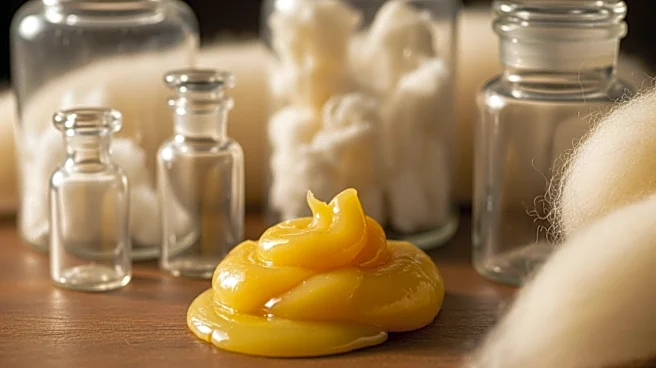





Lanolin, a waxy substance derived from the wool of sheep, has a rich history that spans centuries. Known for its protective and moisturizing properties, lanolin has been utilized in various forms since ancient times. This article explores the historical development of lanolin, highlighting its evolution and the diverse applications it has found throughout history.
Early Uses and Discovery
The use of lanolin dates back to ancient civilizations, where it was recognized for its
ability to protect and preserve. The substance was initially referred to as wool fat or wool grease, and its waterproofing properties were invaluable for sheep, helping them shed water from their coats. This natural protection was soon harnessed by humans, who began to extract lanolin from sheep's wool for their own use.
Historically, lanolin was used in various pharmacopoeias, often referred to as adeps lanae. Despite being called wool fat, lanolin is not a true fat, as it lacks glycerides. Instead, it consists primarily of sterol esters, which contribute to its unique properties. The extraction and refinement of lanolin became more sophisticated over time, allowing for its use in a wider range of applications.
Lanolin in Traditional Medicine and Cosmetics
Lanolin's moisturizing and protective qualities made it a popular ingredient in traditional medicine and cosmetics. It was commonly used in ointments and creams to treat dry or chapped skin, as well as in products designed to soothe and protect. The substance's ability to form a barrier on the skin made it particularly effective in preventing moisture loss and promoting healing.
In addition to its medicinal uses, lanolin found a place in the beauty industry. It became a key ingredient in cold creams and other skincare products, valued for its ability to soften and smooth the skin. Over the centuries, lanolin's role in cosmetics has evolved, with modern formulations incorporating it into a variety of products, from lip balms to facial moisturizers.
Modern Developments and Industrial Applications
In the modern era, lanolin's applications have expanded beyond personal care. Its water-repellent properties make it an ideal component in industrial products, such as rust-proof coatings and lubricants. Lanolin is used in marine environments to prevent barnacle adhesion and corrosion, showcasing its versatility and effectiveness.
The production of lanolin derivatives has also advanced, allowing for the creation of specialized products with tailored properties. These derivatives are used in a wide range of industries, from pharmaceuticals to textiles, highlighting lanolin's continued relevance and adaptability.
In conclusion, lanolin's historical journey from a natural protective agent for sheep to a valuable resource in various industries underscores its enduring significance. Its evolution reflects the ingenuity of human innovation, as lanolin continues to find new applications and maintain its place as a versatile and essential material.