

The push-up is a staple exercise in fitness routines worldwide, known for its simplicity and effectiveness. Despite its straightforward appearance, the push-up engages a complex array of muscles, making it a comprehensive workout for the upper body and core. This article delves into the specific muscle groups activated during a push-up and the mechanics that make it such a powerful exercise.
Primary Muscle Groups
The push-up primarily targets the pectoral muscles, triceps,
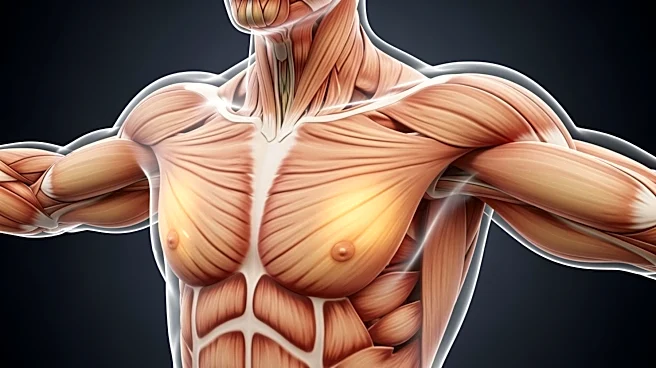
and anterior deltoids. These muscles are responsible for the pushing motion that lifts the body off the ground. The pectoralis major and minor, located in the chest, are the main drivers of this movement, providing the bulk of the force needed to push the body upward. The triceps, located at the back of the upper arm, extend the elbow joints, allowing the arms to straighten and support the body's weight.
In addition to these primary muscles, the anterior deltoids play a crucial role. Situated at the front of the shoulder, these muscles assist in moving the upper arms toward the chest during the upward phase of the push-up. They also help control the speed of movement during the downward phase, ensuring a smooth and controlled descent.
Supporting Muscles and Stabilizers
While the primary muscles do the heavy lifting, several other muscle groups provide essential support and stabilization. The rectus abdominis and transversus abdominis, key components of the core, contract to keep the body aligned and off the floor. These muscles compress the abdomen and help maintain a straight posture throughout the exercise.
The erector spinae, a group of muscles running along the spine, act as stabilizers for the back. They ensure the spine remains straight and supported, preventing sagging or arching during the push-up. Additionally, the gluteus medius and minimus stabilize the upper leg, contributing to overall body stability.
Variations and Their Impact
Different push-up variations can emphasize different muscle groups. For instance, diamond push-ups, where the hands are placed close together, increase the load on the triceps. Wide-arm push-ups, on the other hand, focus more on the chest and shoulders. These variations allow individuals to target specific areas and adjust the difficulty level of the exercise.
Weighted push-ups add another layer of complexity, increasing the resistance and requiring greater muscle engagement. By placing weights on the upper back, the exercise becomes more challenging, promoting muscle growth and strength development.
Understanding the anatomy and mechanics of a push-up can enhance your workout routine, allowing you to maximize the benefits of this versatile exercise. Whether you're a beginner or an advanced athlete, the push-up offers a comprehensive workout that engages multiple muscle groups, promoting strength and stability throughout the body.