
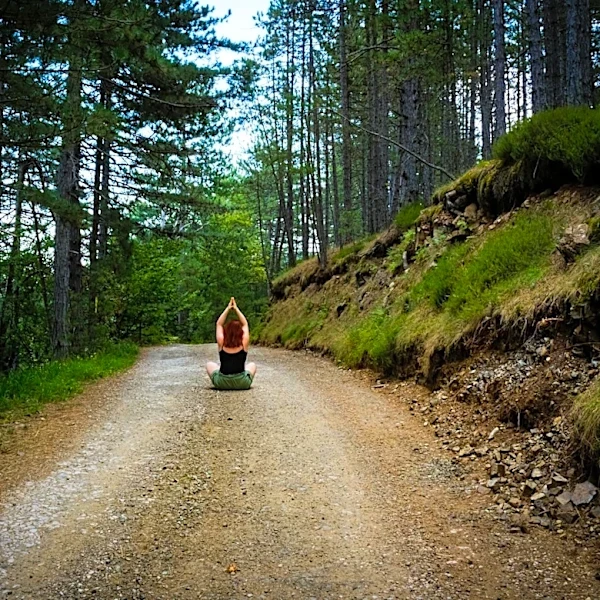



Sukhasana, often referred to as the "easy pose," is a fundamental seated posture in yoga. It is particularly favored for its simplicity and accessibility, making it an ideal choice for beginners and those with joint issues. This pose is not only a staple in yoga practice but also holds significance in various spiritual traditions, including Hinduism and Buddhism.
The Purpose of Sukhasana
Sukhasana is designed to promote relaxation and facilitate meditation. As the simplest
of the seated postures, it allows practitioners to focus on their breath and inner state without the distraction of physical discomfort. This makes it an excellent starting point for those new to meditation or yoga. The pose encourages a straight back and crossed legs, which helps in maintaining a stable and comfortable position for extended periods.
For individuals with joint problems, Sukhasana offers a gentle alternative to more complex seated postures. Its ease of execution means that it can be practiced by almost anyone, regardless of age or physical condition. This inclusivity is one of the reasons why Sukhasana is often recommended as a foundational pose in yoga classes.
Variations of Sukhasana
While Sukhasana itself is straightforward, there are several variations that practitioners can explore. These variations can add depth to the practice and accommodate different levels of flexibility and comfort. For instance, Guptasana involves crossing the legs with the heels overlapping and the soles of the feet turned upward, creating a sense of concealment. Muktasana, or the "position of freedom," also involves overlapping the heels but focuses on a sense of liberation in the posture.
Other variations include Siddhasana, known as the "perfect pose," which involves crossing the legs with the feet placed in front of the perineum. Svastikasana, or the "position of fortune," requires the feet to be placed behind the opposite knee, while Padmasana, or the "lotus position," involves placing the feet on top of the thighs. Each variation offers unique benefits and challenges, allowing practitioners to deepen their practice over time.
Sukhasana in Spiritual Traditions
Beyond its physical benefits, Sukhasana holds a place in spiritual practices across various cultures. In Hinduism and Buddhism, it is often used as a meditative posture, symbolizing peace and inner tranquility. The simplicity of the pose allows practitioners to focus on their spiritual journey without the distraction of physical discomfort.
In these traditions, Sukhasana is more than just a physical posture; it is a gateway to deeper meditation and self-awareness. By sitting in Sukhasana, practitioners can cultivate a sense of calm and centeredness, which is essential for spiritual growth. This makes Sukhasana not only a practical choice for meditation but also a meaningful one, connecting the physical practice of yoga with its spiritual roots.