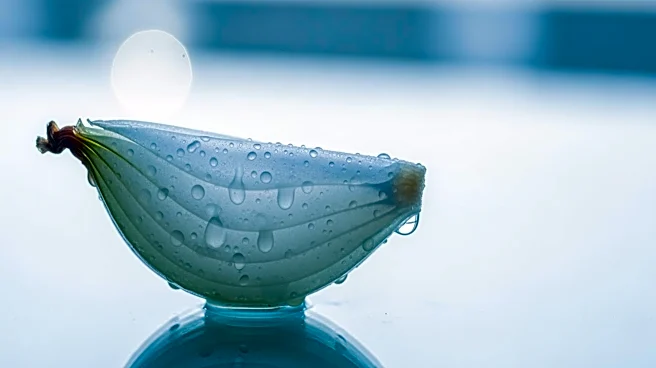




Anyone who has ever chopped an onion knows the familiar sting and tears that follow. This common kitchen experience is due to a fascinating chemical reaction that occurs when onions are cut. This article delves into the science behind why onions make us cry and explores the chemical processes involved.
The Chemical Reaction
When an onion is cut, it triggers a series of chemical reactions that lead to the release of a volatile liquid known as syn-propanethial-S-oxide. This
compound is responsible for the stinging sensation in the eyes and the subsequent tears. The process begins when the cells of the onion are damaged, releasing enzymes called alliinases.
These enzymes break down amino acid sulfoxides, generating sulfenic acids. A specific sulfenic acid, 1-propenesulfenic acid, is rapidly acted upon by another enzyme, the lacrimatory factor synthase (LFS), producing syn-propanethial-S-oxide. This gas diffuses through the air and reaches the eyes, where it activates sensory neurons, causing the lacrimal glands to produce tears to dilute and flush out the irritant.
Variations Among Onion Species
The amount of sulfenic acids and lacrimal factor released varies among different Allium species. Some onions are more pungent and cause more irritation than others. In 2008, researchers in New Zealand developed "no tears" onions by genetically modifying them to prevent the synthesis of lacrimatory factor synthase.
These modified onions have a lower LFS content, which reduces the irritation effect. However, some consumers find that these onions have an inferior flavor due to the reduced sulfur content. The process of differentiating LFS- and LFS+ onions has been developed using mass spectrometry, with potential applications in high-volume production.
Minimizing Eye Irritation
There are several methods to minimize eye irritation when cutting onions. One common technique is to cut onions under running water or submerged in a basin of water. This helps to wash away the volatile compounds before they can reach the eyes. Leaving the root end intact while cutting can also reduce irritation, as the onion base has a higher concentration of sulfur compounds.
Despite the tears they cause, onions remain a beloved ingredient in kitchens worldwide. Understanding the science behind onion tears not only demystifies this common experience but also highlights the intricate chemical processes that occur in everyday life.