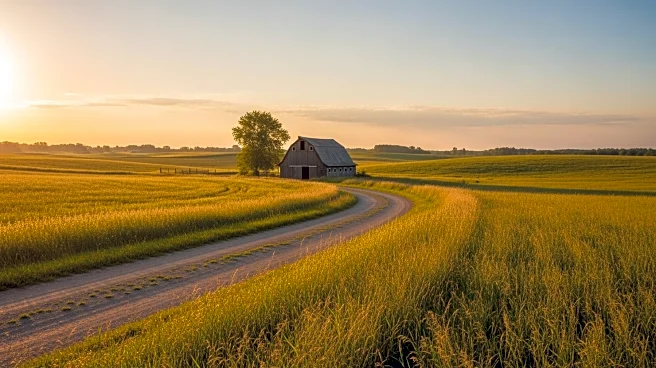








Iowa's development from a land inhabited by Native American tribes to a modern state has brought significant cultural and social changes. This article explores the impact of these changes, focusing on the interactions between Native American tribes and European settlers, the establishment of communities, and the evolution of Iowa's cultural identity. From the early days of exploration to the present, Iowa's cultural landscape has been shaped by diverse
influences and historical events.
Native American Tribes and European Interaction
The cultural landscape of Iowa was initially defined by the Native American tribes that inhabited the region. Tribes such as the Ioway, Sauk, and Meskwaki had established complex social and economic systems, relying on agriculture and trade. The arrival of European explorers and traders in the late 17th century introduced new dynamics to these tribes.
European interaction brought both opportunities and challenges to Native American tribes. The introduction of European goods, such as metal tools and weapons, altered traditional practices and trade relationships. However, the spread of diseases and territorial conflicts led to significant disruptions in tribal life. By the early 19th century, many tribes were forced to relocate, leading to a decline in their presence in Iowa.
Establishment of Communities and Social Change
As European settlers moved into Iowa, they established communities that became centers of trade and social interaction. Towns like Burlington, Dubuque, and Davenport emerged as important hubs, attracting settlers from various backgrounds. These communities played a crucial role in shaping Iowa's social fabric.
The influx of settlers brought diverse cultural influences to Iowa. Immigrants from Germany, Ireland, and Scandinavia contributed to the state's cultural diversity, establishing traditions and practices that enriched Iowa's social landscape. The development of railroads and transportation networks further facilitated cultural exchange and economic growth.
Evolution of Iowa's Cultural Identity
Iowa's cultural identity has evolved significantly over the years, reflecting the state's diverse heritage and historical experiences. The transition from a territory to a state in 1846 marked a turning point, as Iowa began to establish its political and economic identity. The state's agricultural roots played a central role in shaping its cultural identity, with farming communities becoming integral to Iowa's social fabric.
Today, Iowa's cultural identity is characterized by a blend of traditional values and modern influences. The state's rich history is celebrated through cultural events, museums, and historical sites that preserve the legacy of its Native American and immigrant communities. Iowa's cultural evolution continues to be shaped by its diverse population, reflecting the state's ongoing journey of growth and change.