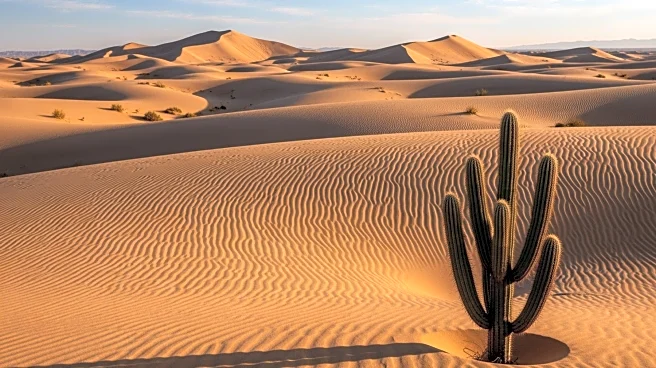




The Gran Desierto de Altar, part of the Sonoran Desert in Mexico, is a region of remarkable biodiversity. This desert is not only a UNESCO World Heritage Site but also a biosphere reserve that hosts a variety of plant and animal species. The unique ecosystem of the Gran Desierto de Altar is shaped by its volcanic landscape and active dunes, making it a fascinating subject for ecological study.
Flora of the Gran Desierto de Altar
The Gran Desierto de Altar is home to over 540 species
of plants, showcasing a rich tapestry of desert flora. Among these are the iconic teddy-bear chollas, ocotillos, and saguaros, which thrive in the arid conditions. These plants have adapted to the harsh environment, with features such as water storage capabilities and protective spines.
The presence of volcanic soil contributes to the unique plant life in the region. The Pinacate Mountains, with their volcanic origins, provide a nutrient-rich substrate that supports diverse vegetation. This volcanic influence is evident in the vibrant colors and varied forms of the desert plants, which add to the visual beauty of the landscape.
Fauna of the Gran Desierto de Altar
The animal life in the Gran Desierto de Altar is equally diverse, with 40 species of mammals, 200 species of birds, and 40 species of reptiles, amphibians, and freshwater fishes. Notable among these are the Sonoran pronghorn, bighorn sheep, gila monster, and desert tortoise, all of which are threatened endemic species.
These animals have evolved to survive in the extreme conditions of the desert. For instance, the Sonoran pronghorn is adapted to long-distance running, which helps it escape predators. The gila monster, a venomous lizard, is known for its ability to store fat in its tail, allowing it to endure periods of food scarcity.
Conservation Efforts and Challenges
The Gran Desierto de Altar is part of the El Pinacate y Gran Desierto de Altar Biosphere Reserve, which aims to protect its unique ecosystem. Conservation efforts focus on preserving the habitat and the species that depend on it. However, these efforts face challenges such as the militarization of the Mexico–United States border and the construction of the border wall, which threaten wildlife migration routes.
Despite these challenges, the biosphere reserve continues to be a critical area for ecological research and conservation. The unique combination of volcanic landscapes and active dunes makes it a valuable natural laboratory for studying desert ecosystems and the effects of climate change on biodiversity.