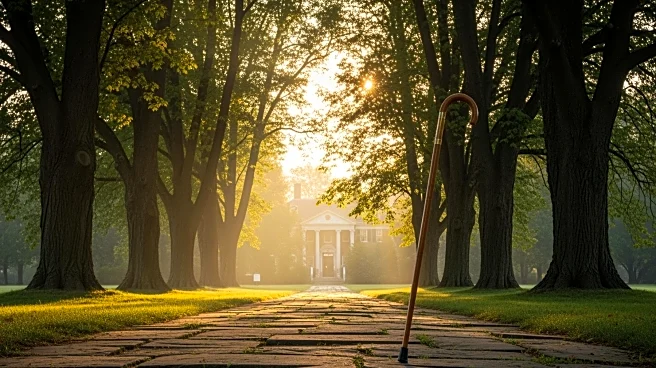


After the American Revolution, George Washington returned to his beloved Mount Vernon, eager to resume a life of peace and privacy. This period, from 1783 to 1789, was marked by Washington's efforts to manage his estate and reflect on the future of the nation he helped to create. Despite his desire for a quiet life, Washington's influence and leadership were still in demand, setting the stage for his eventual presidency.
A Return to Private Life
Upon returning to Mount Vernon,
Washington expressed his satisfaction in leaving public life behind. He was eager to enjoy the tranquility of his estate and the company of his family and friends. Washington's correspondence from this time reveals a man content with his decision to retire, as he wrote to Lafayette about his plans to "move gently down the stream of life." Despite his intentions, Washington's reputation as a leader and statesman meant that he was never far from the public eye.
Washington's return to Mount Vernon allowed him to focus on his personal interests and the management of his estate. He was involved in various projects, including the Great Dismal Swamp and Potomac Canal, although these ventures did not yield significant financial returns. Washington also undertook a 34-day journey to inspect his land holdings in the Ohio Country, demonstrating his continued interest in expanding his agricultural pursuits.
Challenges and Innovations at Mount Vernon
Washington faced several challenges upon his return to Mount Vernon. The estate had not been profitable during his absence, and he struggled with poor crop yields and financial difficulties. Despite these setbacks, Washington was determined to make his estate successful. He implemented a new landscaping plan and experimented with cultivating fast-growing trees and native shrubs.
One of Washington's most notable innovations during this time was his decision to breed mules. After receiving a stud from King Charles III of Spain, Washington became convinced that mules would revolutionize agriculture. His efforts in this area were part of a broader strategy to improve the productivity and profitability of Mount Vernon.
The Call to Leadership
Although Washington was content in his retirement, the political climate of the time continued to draw him back into public service. The weaknesses of the Articles of Confederation and events like Shays's Rebellion highlighted the need for a stronger national government. Washington's presence at the Constitutional Convention in 1787 was crucial in lending credibility to the proceedings and ensuring the ratification of the new Constitution.
Washington's time at Mount Vernon was a period of reflection and renewal, both personally and for the nation. His leadership and vision were instrumental in shaping the future of the United States, and his eventual election as the first president was a testament to the enduring trust and respect he commanded.