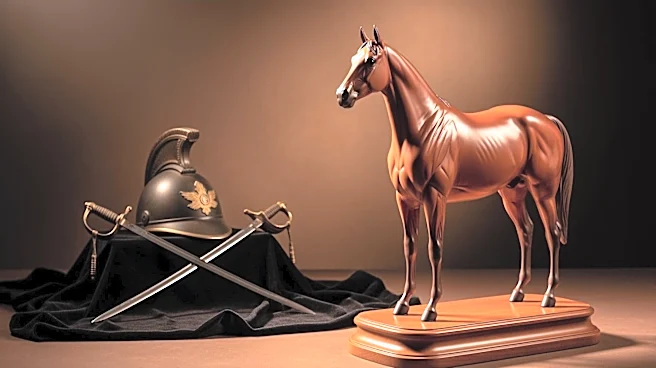







Sir Huon, a Thoroughbred racehorse foaled in 1903, is best known for his victory in the 1906 Kentucky Derby. However, his story extends beyond the racetrack, as he transitioned from a celebrated racehorse to a sire for military horses. This transformation highlights the multifaceted roles that Thoroughbred horses can play, contributing to both the sport of horse racing and the practical needs of the military.
The Racing Career of Sir Huon
Sir Huon's racing career was distinguished
by several significant victories. His most notable achievement was winning the 1906 Kentucky Derby, a race that has become synonymous with excellence in horse racing. With Roscoe Troxler as his jockey, Sir Huon won the Derby by two lengths, marking a historic moment as the first horse since 1902 to win the Derby without racing as a three-year-old prior to the event. In addition to the Derby, Sir Huon also won the 1905 Harold Stakes and the 1906 Latonia Derby, Cincinnati Queen City Handicap, Commonwealth Handicap, and Seagate Stakes, showcasing his prowess on the track.
Transition to Stud and Military Service
After retiring from racing in 1908, Sir Huon was transitioned to stud. Although he did not produce any notable offspring, his genetic legacy continued through a few Quarter horse lineages. In 1918, Sir Huon was given to the United States Army cavalry remount service by George Long, his breeder. This move marked a significant shift in his role, as he became a sire for military horses, contributing to the cavalry's needs during a time when horses were essential for transportation and logistics.
The Broader Impact of Sir Huon
Sir Huon's transition from a racehorse to a military sire underscores the versatility and value of Thoroughbred horses. His story illustrates how racehorses can serve multiple purposes, from achieving glory on the track to supporting military operations. This dual role highlights the broader impact of Thoroughbred horses on society, demonstrating their importance beyond the realm of sports. Sir Huon's legacy is a testament to the adaptability and enduring significance of racehorses, reflecting the rich history and tradition of equine contributions to both sport and service.