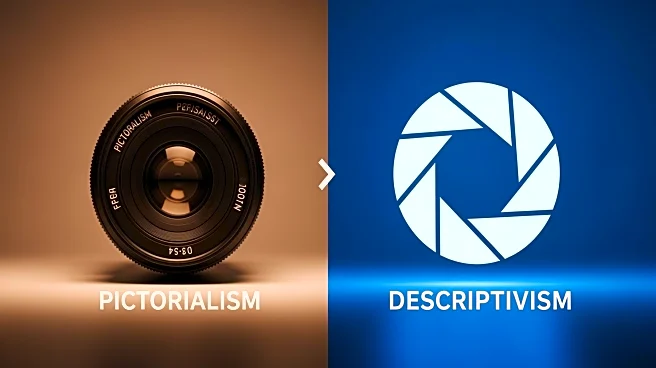




The imagery debate is a central topic in cognitive science, focusing on how mental imagery represents information in the mind. This debate is primarily between two opposing views: pictorialism and descriptivism. Each perspective offers a different understanding of how mental images are formed and utilized in cognitive processes. This article explores the key arguments and evidence supporting both pictorialism and descriptivism, shedding light on this
ongoing debate.
Pictorialism: The Case for Depictive Imagery
Pictorialism posits that mental images are represented in a depictive, picture-like format. Proponents of this view argue that when individuals recall information, they construct internal visual images that resemble actual pictures. For example, when asked about the shape of a dog's ears, many people report visualizing a dog and focusing on its ears within that mental image. This suggests that mental imagery functions similarly to visual perception, allowing individuals to manipulate and extract information from these images.
Stephen Kosslyn is a prominent advocate of pictorialism, proposing that mental images operate like visual displays generated by a computer. His research suggests that mental images can be transformed through operations such as rotation, scanning, and scaling, much like physical objects in the external world. Empirical studies, such as those by Cooper and Shepard, support this view by demonstrating that mental rotation of images mirrors physical rotation, indicating an analog process.
Descriptivism: The Argument for Propositional Imagery
In contrast, descriptivism argues that mental imagery is not composed of literal pictures but rather symbolic, language-like structures. Zenon Pylyshyn, a leading proponent of descriptivism, contends that cognition is grounded in propositional representations, which are more abstract and systematic than pictorial images. Descriptivists maintain that mental representations are composed of symbolic encodings that exhibit properties essential to human thought, such as compositionality and productivity.
Descriptivists argue that the errors individuals make when reproducing visual information are better explained by limitations in verbal description or conceptual understanding than by deficiencies in an internal image. Pylyshyn critiques pictorialism by highlighting studies that show systematic errors in recall and reconstruction, suggesting that mental imagery is fundamentally propositional rather than depictive.
The Ongoing Relevance of the Imagery Debate
Although the imagery debate was a focal point of cognitive research in the 1980s, it remains relevant today. The debate has reshaped both psychology and philosophy by reviving serious consideration of mental imagery, which had been largely dismissed during the behaviorist era. Recent neuroimaging studies have added new dimensions to the discussion, showing that imagining scenes engages different brain regions than perceiving them, challenging strict pictorialist views.
The imagery debate continues to influence contemporary research on imagination, memory, and consciousness. While some original contributors have declared the debate "dead," its legacy persists in exploring how mental imagery shapes cognitive processes. As researchers delve deeper into the complexities of mental imagery, the debate between pictorialism and descriptivism remains a vital area of inquiry, offering insights into the nature of human thought and perception.