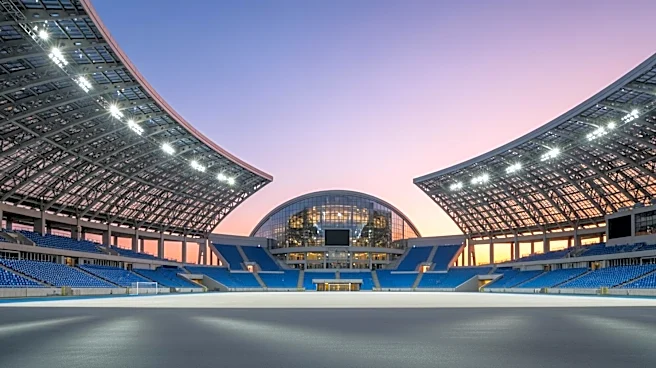







Luzhniki Stadium, a landmark in Moscow, Russia, has undergone significant transformations since its inception. Originally built in the 1950s, the stadium has evolved to meet the demands of modern sports events while preserving its historical essence. This article explores the architectural journey of Luzhniki Stadium from its Soviet-era origins to its current status as a modern marvel.
The Original Design and Construction
The construction of Luzhniki Stadium began in 1955, driven by the
Soviet Union's desire to establish a world-class sports venue. The architects and engineers faced the challenge of building on waterlogged soil, which required innovative solutions such as driving 10,000 piles into the ground. The stadium was completed in just 450 days, a testament to the efficiency and determination of the Soviet construction teams.
The original design featured a seating capacity of 103,000, making it one of the largest stadiums globally. The stadium's architecture was characterized by its grand scale and functional design, reflecting the Soviet Union's emphasis on showcasing its strength and capabilities.
Renovations for the 1980 Olympics
In preparation for the 1980 Summer Olympics, Luzhniki Stadium underwent its first major renovation. The upgrades included the installation of new seating and the construction of a roof over the stands. These changes were necessary to accommodate the influx of international visitors and to enhance the spectator experience.
The renovations were part of a broader effort to present the Soviet Union as a modern and capable host for the Olympics. The stadium's role in the opening and closing ceremonies, as well as key athletic events, highlighted its importance on the global stage.
Modernization for the 2018 FIFA World Cup
The most significant transformation of Luzhniki Stadium occurred in the lead-up to the 2018 FIFA World Cup. The original structure was demolished in 2013, but the historic facade was preserved due to its architectural value. The new design increased the seating capacity to 81,000 and included state-of-the-art facilities.
The renovations focused on enhancing the stadium's functionality and aesthetics. A hybrid turf was installed, and the spectator stands were moved closer to the pitch, improving the viewing experience. The roof was upgraded with a polycarbonate skin and exterior lighting, adding a modern touch to the historic venue.
Luzhniki Stadium's architectural evolution reflects its ability to adapt to changing times while honoring its rich history. As a venue that has hosted some of the world's most prestigious sports events, it stands as a symbol of Moscow's enduring legacy in the world of sports.