
Group 5 racing cars have a storied history in the world of motorsport, evolving significantly from their inception in 1966 until their discontinuation in 1982. This classification, governed by the FIA, saw several transformations, adapting to the changing landscape of racing and technological advancements. From Special Touring Cars to Sports Cars and finally to Special Production Cars, Group 5 cars have left a lasting impact on racing history.
The Birth of Special Touring Cars
In 1966,
the FIA introduced Group 5 as a category for Special Touring Cars. This new classification allowed for more extensive modifications than those permitted in the existing Group 1 and Group 2 categories. The regulations were designed to encourage innovation and performance enhancements, leading to highly modified touring cars that could compete at a higher level. This category was quickly adopted by major racing championships, including the British Saloon Car Championship and the European Touring Car Championship.
The Special Touring Cars category was short-lived, however, as it was discontinued after the 1969 season. Despite its brief existence, this initial phase of Group 5 laid the groundwork for future developments in the classification, setting a precedent for the level of modification and performance that would become synonymous with Group 5 racing.
Transition to Sports Cars
In 1970, Group 5 regulations were applied to a new category of limited production Sports Cars. These vehicles were restricted to a 5-liter engine capacity and were required to meet a minimum production number of 25 units. This change marked a significant shift from the touring car roots of Group 5, as the focus moved towards high-performance sports cars capable of competing in the FIA's International Championship for Makes.
The 1970 and 1971 seasons saw fierce competition among manufacturers, with iconic models like the Porsche 917 and Ferrari 512S taking center stage. However, the FIA decided to replace this iteration of Group 5 with a new set of regulations in 1972, which eliminated the minimum production requirement and reduced the maximum engine capacity to 3 liters. This change aimed to balance performance and safety, as well as to encourage more manufacturers to participate in the championship.
The Era of Special Production Cars
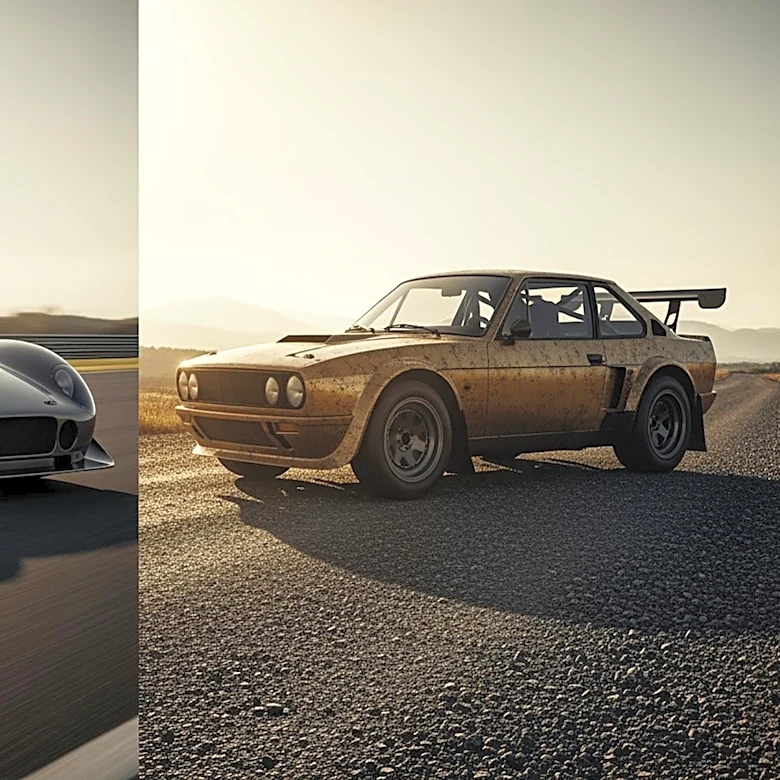
From 1976 to 1982, Group 5 underwent its final transformation into a category for Special Production Cars. This liberal silhouette formula allowed for extensive modifications to production-based vehicles, which were homologated in FIA Groups 1 through 4. The new regulations permitted significant alterations to the bodywork and mechanical components, resulting in some of the most visually striking and technically advanced racing cars of the era.
These Special Production Cars competed in prestigious series such as the World Championship for Makes and the Deutsche Rennsport Meisterschaft. The category was known for its wide, boxy wheel arches and extravagant body styles, which became iconic symbols of Group 5 racing. Despite its popularity, the classification was eventually discontinued in 1982, making way for new regulations and the next chapter in motorsport history.