








Gothic fiction, a genre steeped in mystery and the supernatural, has undergone significant transformations since its inception in the 18th century. Originally characterized by medieval settings and themes of fear and the supernatural, Gothic fiction has evolved to include urban landscapes and modern societal issues. This article explores the historical development of Gothic fiction, tracing its journey from the haunted castles of its early days to the bustling
cities of contemporary narratives.
The Birth of Gothic Fiction
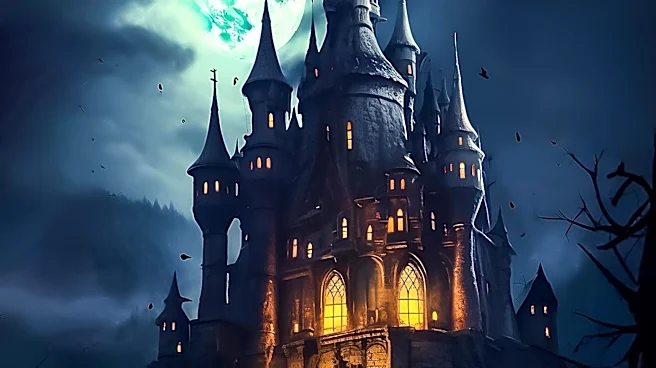
Gothic fiction emerged in the 18th century, with Horace Walpole's 1764 novel, *The Castle of Otranto*, often cited as the first Gothic novel. Walpole's work combined elements of medieval romance with the modern novel, creating a new genre that captivated readers with its blend of supernatural events and emotional realism. This novel set the stage for future Gothic works, establishing key themes such as haunted castles, mysterious family secrets, and the intrusion of the past upon the present.
The genre gained popularity in the late 18th century, with authors like Ann Radcliffe and Matthew Lewis contributing to its growth. Radcliffe's novels, such as *The Mysteries of Udolpho*, were known for their use of the "explained supernatural," where seemingly magical events were given rational explanations. In contrast, Lewis's *The Monk* embraced more sensational and horrifying elements, showcasing the genre's capacity for both subtlety and shock.
Gothic Fiction in the 19th Century
The 19th century saw Gothic fiction expand beyond its medieval roots, incorporating new themes and settings. Authors like Mary Shelley and Bram Stoker introduced elements of science fiction and horror, with Shelley's *Frankenstein* exploring the consequences of unchecked scientific ambition and Stoker's *Dracula* delving into the fears of the unknown and the foreign. These works reflected the anxieties of a rapidly changing world, where scientific advancements and cultural shifts challenged traditional beliefs.
During this period, Gothic fiction also began to explore urban settings, as seen in Robert Louis Stevenson's *Strange Case of Dr Jekyll and Mr Hyde*. This novel used the city as a backdrop for its exploration of duality and the darker aspects of human nature, marking a shift from the rural and isolated settings of earlier Gothic works.
Modern Interpretations and Urban Gothic
In the 20th and 21st centuries, Gothic fiction has continued to evolve, with urban Gothic becoming a prominent subgenre. This modern iteration of Gothic fiction often features industrial and post-industrial cityscapes, reflecting contemporary societal issues such as alienation and the loss of identity. Authors like Anne Rice and Stephen King have contributed to this evolution, with Rice's *Vampire Chronicles* and King's numerous works exploring the intersection of the supernatural and the everyday.
Urban Gothic has also influenced other media, including film and graphic novels, where dark city landscapes serve as the perfect setting for tales of horror and suspense. This ongoing transformation of Gothic fiction demonstrates its enduring appeal and adaptability, as it continues to captivate audiences with its exploration of fear, the supernatural, and the human condition.