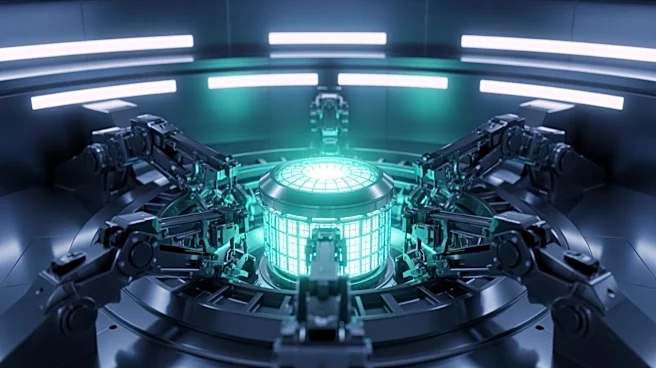







Online refueling is a significant advancement in nuclear power technology, allowing reactors to change fuel while still generating electricity. This technique improves the availability and profitability of nuclear power plants by minimizing downtime during refueling. However, it also presents unique challenges that must be addressed to ensure safe and efficient operation.
Benefits of Online Refueling
One of the primary benefits of online refueling is the ability to maintain electricity
generation during routine refueling periods. This capability enhances the economic viability of nuclear power plants by reducing the need for high-intensity offline refueling programs. Instead of shutting down the reactor completely, operators can exchange a small number of fuel elements at a time, allowing for more flexible refueling schedules.
Online refueling is particularly advantageous in scenarios where frequent refueling is required, such as during the production of plutonium for nuclear weapons. In these cases, low-burnup fuel is needed, which requires short irradiation periods. Additionally, the frequent rearrangement of fuel within the reactor core can balance the thermal load, allowing for higher fuel burnup. This reduces both the fuel requirements and the amount of high-level nuclear waste that needs disposal.
Challenges and Design Considerations
Despite its benefits, online refueling requires specific design considerations that can make it uneconomical for some reactor types. The added complexity of refueling equipment and the need for pressurization during refueling in gas and water-cooled reactors are significant challenges. For example, the online refueling equipment for Magnox reactors proved less reliable than the reactor systems themselves, leading to its retrospective view as a mistake.
Reactor designs that incorporate online refueling capabilities typically include liquid sodium-cooled, gas-cooled, or water-cooled reactors with pressurized channels. However, water-cooled reactors using pressurized vessels, such as PWR and BWR reactors, are unsuitable for online refueling due to the need for depressurization during disassembly.
Future Prospects and Reactor Designs
Several planned reactor designs aim to incorporate online refueling, including pebble-bed and molten salt Generation IV reactors. These designs promise to enhance the efficiency and flexibility of nuclear power generation further. Notable past and present reactor designs with online refueling capabilities include CANDU reactors, IPHWR reactors, and RBMK reactors, among others.
In conclusion, online refueling represents a significant advancement in nuclear power technology, offering numerous benefits in terms of efficiency and waste reduction. However, it also presents challenges that require careful consideration in reactor design and operation. As technology continues to evolve, online refueling is likely to play an increasingly important role in the future of nuclear power generation.