

Akarna Dhanurasana, also known as the Archer pose, is a fascinating yoga posture with a rich history and etymology. This seated asana is part of both hatha yoga and modern yoga practices. The pose is visually striking, resembling an archer about to release an arrow. Understanding the origins and meaning of Akarna Dhanurasana provides insight into its significance within the broader context of yoga.
Historical Background
The history of Akarna Dhanurasana can be traced back
to ancient yoga texts. Although the pose is not explicitly named in early texts, its description appears in the 18th-century hatha yoga text, Haṭhābhyāsapaddhati. This text describes a posture where the yogi grasps the toes of the feet with both hands and touches the big toes to the ears, one at a time. This description aligns with the modern understanding of Akarna Dhanurasana.
In the 19th century, the Sritattvanidhi, a comprehensive manuscript on yoga, depicted the pose as Dhanurasana. The manuscript borrowed the description from Haṭhābhyāsapaddhati, giving the pose a name. It wasn't until B. K. S. Iyengar's 1966 book, "Light on Yoga," that the modern name Akarna Dhanurasana was popularized.
Etymology and Mythological Connections
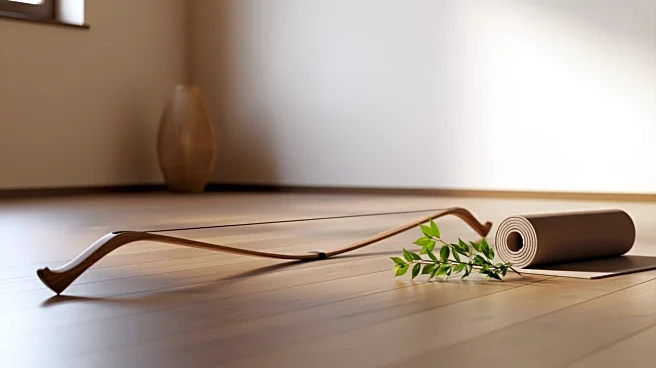
The name Akarna Dhanurasana is derived from Sanskrit. "Karna" means "ear," and the prefix "A" means "towards" or "near." "Dhanura" translates to "bow," and "asana" means "posture" or "seat." Thus, the name suggests a posture where the body mimics the action of drawing a bow towards the ear.
The pose is also linked to a myth from the Ramayana, an ancient Indian epic. In this story, the infant Sita is able to lift Shiva's enormous bow. When she reaches marriageable age, only Rama can wield the bow, thus winning her hand in marriage. This mythological connection adds a layer of cultural significance to the pose, highlighting its symbolic representation of strength and focus.
Modern Practice and Preparation
In modern yoga practice, Akarna Dhanurasana is performed from a seated position with legs outstretched. The practitioner pulls one foot towards the ear, mimicking the action of an archer drawing a bow. This pose requires flexibility and balance, making it a challenging asana for many practitioners.
To prepare for Akarna Dhanurasana, practitioners often use poses like Marichyasana and Baddha Konasana. These preparatory poses help to open the hips and stretch the legs, making it easier to achieve the full expression of the Archer pose. By incorporating these preparatory steps, practitioners can safely and effectively work towards mastering Akarna Dhanurasana.