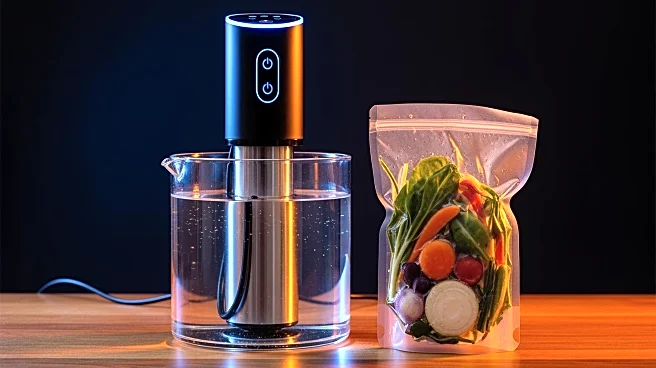


Sous vide cooking, a method that uses low temperatures for extended periods, has transformed culinary practices since its inception. This technique, known for its precision and ability to retain moisture, has a rich history that dates back to the late 18th century. From its early experiments to its modern-day applications, sous vide has evolved significantly, impacting both professional kitchens and home cooking.
Early Beginnings
The concept of low-temperature cooking
was first described by Benjamin Thompson, Count Rumford, in 1799. Thompson experimented with using air as a heat-transfer medium, attempting to roast meat in a machine designed to dry potatoes. His findings revealed that meat cooked at low temperatures was not only edible but also exceptionally well-tasted. This early exploration laid the groundwork for future developments in sous vide cooking.
In the mid-1960s, American and French engineers further developed the method as an industrial food preservation technique. They discovered that applying pressure to food through vacuum sealing, sometimes referred to as "cryovacking," concentrated flavors even without cooking. These advancements highlighted the potential of sous vide for enhancing food texture and flavor.
Modern Innovations
The modern sous vide method was pioneered by French chef Georges Pralus in 1974. Pralus discovered that cooking foie gras using this technique preserved its appearance, minimized fat loss, and improved texture. His work at the Restaurant Troisgros in Roanne, France, marked a significant milestone in the culinary world, establishing sous vide as a valuable cooking method.
Another key figure in the evolution of sous vide is Bruno Goussault, who founded the Centre de Recherche et d'Études pour l'Alimentation (CREA) in 1991. Goussault's research into cooking times and temperatures for various foods helped refine the technique, making it accessible to top chefs worldwide. His collaboration with Pralus further advanced sous vide, combining vacuum sealing with low-temperature cooking.
Contemporary Applications
Today, sous vide is widely used in high-end gourmet restaurants and has gained popularity among home cooks. Chefs like Heston Blumenthal and Thomas Keller have embraced the technique for its precision and ability to produce consistent results. The method is also featured on cooking shows and used by companies like Amtrak for meal preparation.
The availability of affordable sous vide equipment has made it accessible to nonprofessional cooks, allowing them to experiment with this innovative technique. With the rise of user-friendly devices and apps, sous vide continues to evolve, offering new possibilities for culinary creativity and precision.