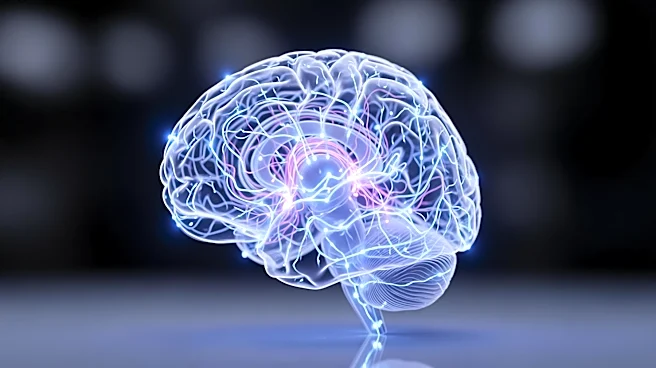







Decision-making is a complex process that involves selecting a course of action from various alternatives. This process is not just a matter of weighing pros and cons; it is deeply rooted in the brain's intricate workings. Neuroscience has made significant strides in understanding which brain regions are involved in decision-making, shedding light on how we make choices.
Brain Structures Involved
Several key brain structures play a crucial role in decision-making. The anterior
cingulate cortex (ACC), orbitofrontal cortex, and the ventromedial prefrontal cortex are among the primary areas involved. These regions are responsible for evaluating options, assessing risks, and predicting outcomes. Neuroimaging studies have shown distinct patterns of neural activation in these areas, depending on whether decisions are made based on personal volition or external directions.
The ventromedial prefrontal cortex, in particular, is critical for making advantageous decisions. Patients with damage to this area often struggle with decision-making, highlighting its importance. This region helps integrate emotional and cognitive information, allowing individuals to weigh the potential benefits and drawbacks of different choices.
The Role of Emotions
Emotions play a significant role in decision-making, often guiding us when faced with uncertainty. The somatic marker hypothesis suggests that emotions, in the form of bodily states, aid in decision-making by marking different options as advantageous or disadvantageous. This process involves an interplay between neural systems that elicit emotional states and those that map these states.
Research has shown that emotions can help individuals make decisions by providing a quick assessment of potential outcomes. For instance, a gut feeling about a choice might be the result of the brain's rapid evaluation of past experiences and current emotional states. This emotional input can be particularly useful in situations where time is limited, and a quick decision is necessary.
Decision-Making Under Pressure
In high-pressure situations, decision-making can become more challenging. The brain's ability to process information quickly and efficiently is put to the test. Studies have shown that in such scenarios, individuals may rely more on intuitive decision-making rather than structured approaches. This reliance on intuition is often guided by the recognition-primed decision model, where past experiences inform current choices.
The environment also plays a role in decision-making. Complex environments, with numerous possible states, can influence cognitive function. Research indicates that more complex environments correlate with higher cognitive function, suggesting that the brain adapts to handle increased complexity, potentially leading to better decision-making outcomes.
Understanding the neuroscience of decision-making provides valuable insights into how we make choices and the factors that influence these processes. By exploring the brain regions involved and the role of emotions, we can better appreciate the complexity of decision-making and its impact on our daily lives.