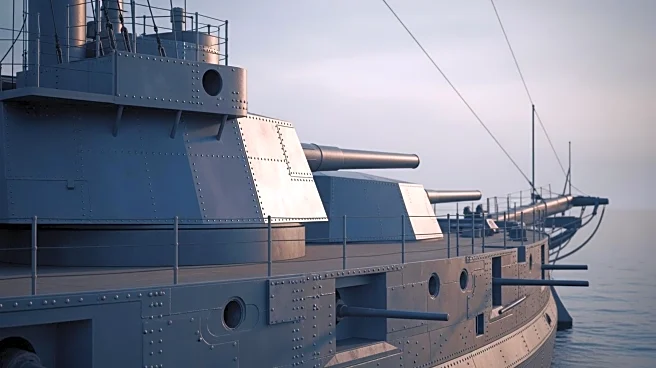




During the American Civil War, the introduction of Monitor warships marked a pivotal shift in naval strategy and combat. These ironclad vessels, characterized by their low profiles and heavy armament, played a crucial role in the Union's efforts to maintain blockades and engage Confederate forces. This article explores the strategic use of Monitor warships during the Civil War and their impact on the conflict's naval battles.
Strategic Importance of Monitors
The Union Navy's adoption
of Monitor warships was driven by the need to counter the Confederate ironclad CSS Virginia, which posed a significant threat to Union blockades. The USS Monitor, the first of its kind, was designed to operate in shallow waters and protect the Union's wooden fleet from the formidable firepower of Confederate ironclads. Its revolving turret and heavy armor made it an ideal vessel for coastal defense and riverine operations.
Monitors were strategically deployed to maintain the Union blockade, a critical component of the Anaconda Plan aimed at suffocating the Confederacy's economy. By preventing the export of cotton and the import of war supplies, the Union sought to weaken the Confederate war effort. The presence of Monitor warships along the coast and in key rivers helped enforce this blockade, limiting the Confederacy's ability to sustain its military operations.
Key Battles Involving Monitors
One of the most famous engagements involving a Monitor warship was the Battle of Hampton Roads in March 1862. The USS Monitor faced off against the CSS Virginia in a historic clash that marked the first meeting of ironclad warships. Although the battle ended in a stalemate, it demonstrated the effectiveness of the Monitor's design and solidified its role in the Union Navy.
Monitors also played a significant role in the Union's riverine campaigns, particularly along the Mississippi River. These vessels were instrumental in the capture of key Confederate strongholds, such as Vicksburg and New Orleans. Their ability to navigate shallow waters and withstand enemy fire made them invaluable assets in the Union's efforts to control the Mississippi and divide the Confederacy.
Legacy of Monitors in the Civil War
The use of Monitor warships during the Civil War had lasting implications for naval warfare. Their success in battle demonstrated the superiority of ironclad vessels over traditional wooden ships, prompting navies worldwide to adopt similar designs. The Monitor's revolving turret and armored hull became standard features in warship construction, influencing naval strategy for decades to come.
The legacy of Monitor warships extends beyond their immediate impact on the Civil War. They represented a shift towards modern naval warfare, where technological innovation and strategic deployment became key factors in achieving victory. The lessons learned from the use of Monitors during the Civil War continue to inform naval tactics and ship design to this day.