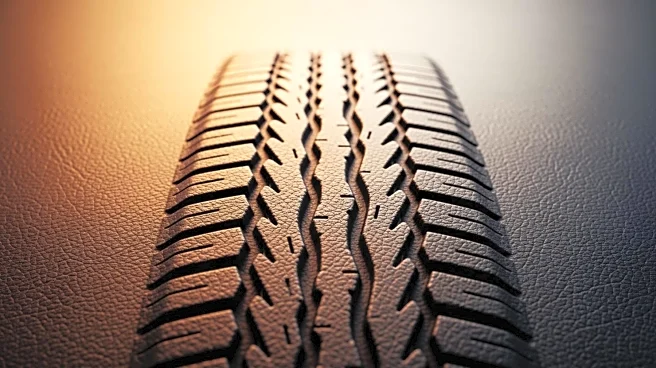




Bridgestone Corporation, a Japanese multinational manufacturing company, has a rich history that dates back to its founding in 1931. Known for its automotive tires and golf equipment, Bridgestone has grown into a global powerhouse with operations in numerous countries. This article delves into the historical development of Bridgestone, highlighting key milestones and challenges that have shaped the company over the decades.
Early Beginnings and Expansion
Bridgestone was founded
by Shojiro Ishibashi in Kurume, Japan, in 1931. The company's name, Bridgestone, is derived from a translation of Ishibashi's surname, meaning 'stone bridge' in Japanese. Initially, Bridgestone focused on manufacturing tires based on Japanese technology, avoiding reliance on European and North American methods. Despite early challenges in technology, production, and sales, Bridgestone improved its quality and manufacturing processes, leading to rapid expansion in domestic and overseas markets.
During World War II, Bridgestone's production was heavily regulated to meet military demands, and the company faced significant setbacks, including the destruction of its Tokyo headquarters. However, Bridgestone quickly resumed production post-war, reinforcing its foundations despite labor strikes. The company diversified into bicycle manufacturing in 1949 and later ventured into powered bicycles and motorcycles, although it eventually ceased motorcycle production.
Technological Innovations and Global Expansion
Bridgestone made significant technological advancements in the 1950s, becoming the first company in Japan to sell rayon cord tires. The company modernized its production facilities and opened a new plant in Tokyo in 1960. Bridgestone's commitment to quality was recognized with the prestigious Deming Prize in 1968, following the adoption of the Deming Plan for overall quality control.
The 1960s marked Bridgestone's era of overseas expansion, with the opening of its first post-war plant in Singapore in 1965 and subsequent production facilities in Thailand and the United States. Bridgestone continued to innovate, introducing its first radial tire in 1967 and expanding its product line with high-performance radial tires in the 1970s.
Strategic Acquisitions and Modern Developments
In 1988, Bridgestone acquired the Firestone Tire and Rubber Company, a move that significantly expanded its global footprint. Bridgestone invested heavily in rebuilding Firestone, achieving surplus annual profits in the early 1990s. The acquisition led to the formation of Bridgestone Americas, Inc., which now operates the world's largest chain of automotive tire and service centers.
Bridgestone has continued to expand its global presence, with major manufacturing plants in numerous countries. The company has also invested in advanced tire production and testing facilities, such as the Bridgestone Americas Technical Center in Akron, Ohio. Bridgestone's commitment to innovation and quality has solidified its position as a leader in the tire industry, with ongoing efforts to enhance competitiveness and sustainability.