

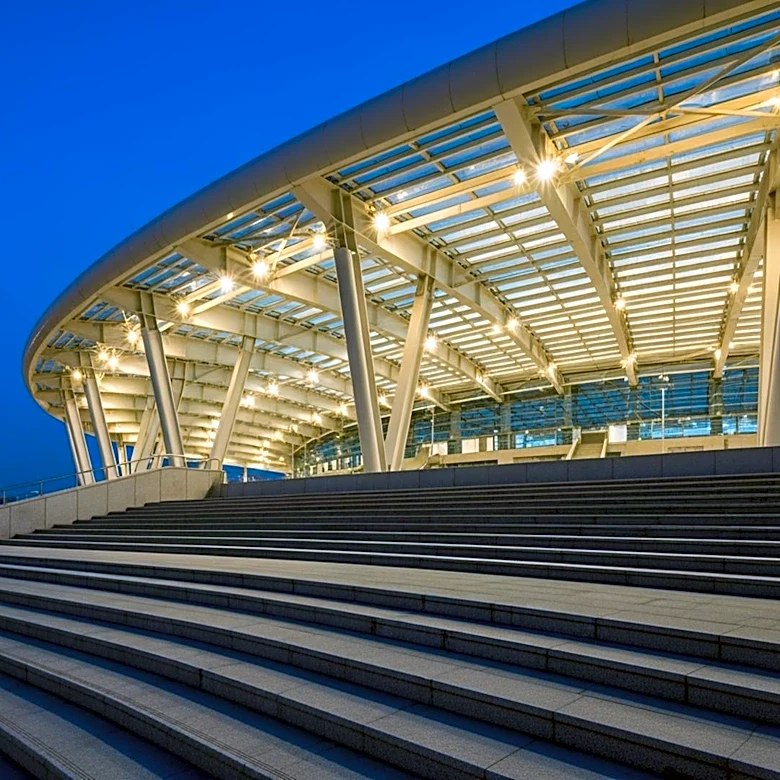




Noevir Stadium Kobe, located in Kobe, Japan, has undergone significant transformations since its inception. Originally known as Kobe Central Football Stadium, it has evolved into a modern sports venue with a rich history. This article explores the stadium's development, highlighting key milestones and changes that have shaped its current form.
Early Beginnings and Initial Construction
The site of Noevir Stadium Kobe has been a focal point for sports in Kobe since 1970. It was initially home
to the Kobe Central Football Stadium, which was notable for being the first in Japan to host night games, thanks to the installation of floodlights. This early innovation set the stage for the stadium's future as a premier sports venue.
In 2001, the stadium underwent a major transformation to prepare for the 2002 FIFA World Cup. It was renamed Kobe Wing Stadium and expanded to accommodate 42,000 spectators. This renovation included the installation of a retractable roof, enhancing its functionality and appeal as a world-class sports facility.
Renovations and Name Changes
Following the World Cup, the stadium's capacity was reduced to 32,000, and it became the home ground for Vissel Kobe, a J1 League football club. In 2007, the stadium underwent another name change to Home's Stadium Kobe after Next Co., Ltd. acquired the naming rights. This period marked a new chapter in the stadium's history, as it continued to host major sporting events and serve as a hub for local and international sports.
In 2013, the stadium was renamed Noevir Stadium Kobe after a local cosmetics company secured the naming rights. This change reflected the stadium's ongoing evolution and its importance to the community and local businesses. The stadium's capacity was adjusted to 30,132, making it a more intimate venue while maintaining its status as a top-tier sports facility.
Recent Developments and Current Use
Noevir Stadium Kobe has continued to play a significant role in the sports world, hosting events such as the 2019 Rugby World Cup. This marked the first time the Rugby World Cup was held in Asia, and the stadium was chosen as one of the venues for this historic event. Four group games were played at the stadium, showcasing its ability to host international competitions.
Today, Noevir Stadium Kobe remains a vital part of Kobe's sports landscape. It serves as the home ground for both Vissel Kobe and the Kobelco Kobe Steelers, a rugby union team. The stadium's modern amenities, including its retractable roof and grass surface, make it a versatile venue for various sports and events.
In conclusion, Noevir Stadium Kobe's evolution from a local football stadium to a world-class sports venue reflects its adaptability and significance in the sports community. Its history of renovations and name changes highlights its ongoing commitment to providing a premier experience for athletes and fans alike.