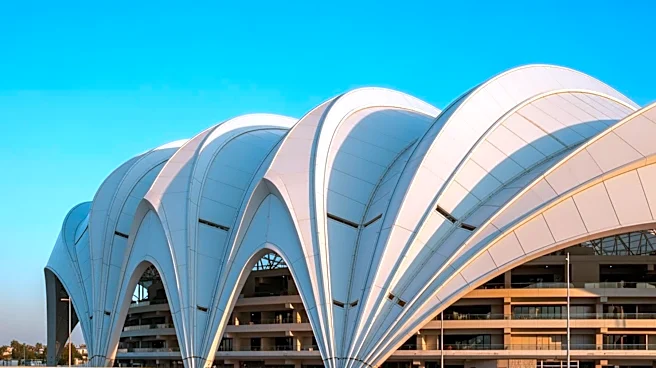









Al Janoub Stadium, located in Al Wakrah, Qatar, is a striking example of modern architectural design. Opened in 2019, this stadium was designed by the renowned Iraqi-British architect Zaha Hadid, in collaboration with AECOM and Jain & Partners of Dubai. The stadium's design is not only visually captivating but also deeply rooted in the cultural and historical context of the region.
Design Inspiration
The design of Al Janoub Stadium draws inspiration from the traditional
dhows, which are sailing vessels used by pearl divers in the Persian Gulf. The stadium's curvilinear roof mimics the sails of these boats, creating a sense of movement and fluidity. This design choice pays homage to Al Wakrah's rich history of seafaring and pearl diving, integrating cultural elements into a modern structure.
The stadium's exterior is characterized by its neo-futurist and postmodernist style, with a retractable roof that adds to its functionality. The roof is supported by bowed beams that resemble a ship's hull, further enhancing the nautical theme. This innovative design not only provides aesthetic appeal but also offers practical benefits, such as shading and shelter for spectators.
Cooling and Sustainability Features
Given Qatar's hot and arid climate, Al Janoub Stadium incorporates advanced cooling technology to ensure comfort for both players and spectators. The cooling system is capable of maintaining temperatures of 18°C in the spectator areas and 20°C on the field. This is achieved through a combination of aerodynamics and optimal shading from the roof, which minimizes the use of glass to aid in temperature control.
The stadium's design also emphasizes sustainability. The use of pleated PTFE fabric and cables in the retractable roof contributes to energy efficiency. The stadium's shape and materials were carefully selected to reduce the environmental impact, aligning with Qatar's commitment to sustainable development.
Multifunctional Facilities
Beyond its role as a football venue, Al Janoub Stadium is part of a larger sports complex that includes a variety of facilities. These include a multipurpose room, swimming pools, spas, and a shopping center with green roofs. The complex is designed to serve the community, offering spaces for activities such as cycling, horse riding, and running.
Future plans for the stadium include reducing its seating capacity from 40,000 to 20,000, with the excess seats being donated to developing countries. This transformation will allow the stadium to continue serving as a hub for local sports and community events, ensuring its legacy extends beyond the 2022 FIFA World Cup.