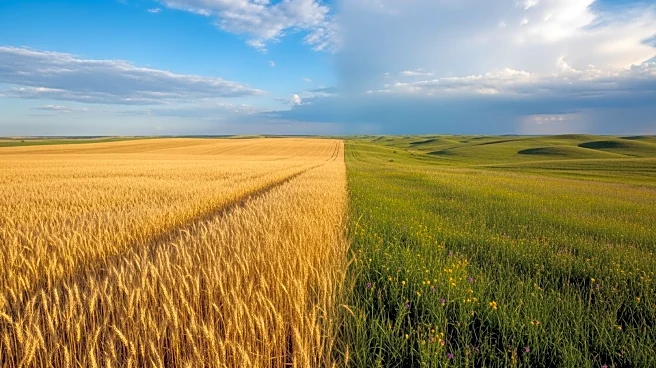




Kansas, often perceived as a flat and uniform landscape, actually boasts a diverse geography and climate. This article explores the varied topography and weather patterns that define the state, offering a deeper understanding of its natural environment.
Geographic Features
Kansas is located in the heart of the United States, bordered by Nebraska, Missouri, Oklahoma, and Colorado. The state is divided into 105 counties, with its largest county by area being Butler County.
Despite its reputation for flatness, Kansas's topography is more varied than many realize.
The state is underlain by sedimentary rocks, with the eastern and southern parts featuring Mississippian, Pennsylvanian, and Permian rocks. The western half of Kansas showcases Cretaceous through Tertiary sediments, derived from the erosion of the Rocky Mountains. The state's highest point, Mount Sunflower, reaches 4,039 feet, while the lowest point is along the Verdigris River at 684 feet. This range in elevation contributes to the state's diverse landscapes, from rolling hills to expansive plains.
Rivers and Waterways
Kansas is home to several significant rivers, which play a crucial role in its geography and economy. The Missouri River defines part of the state's northeastern boundary, while the Kansas River, formed by the junction of the Smoky Hill and Republican rivers, flows across the northeastern region.
The Arkansas River, originating in Colorado, traverses the western and southern parts of Kansas, forming a vital drainage system along with its tributaries. Other notable rivers include the Saline, Solomon, and Marais des Cygnes, each contributing to the state's water resources and agricultural irrigation.
Climate Variability
Kansas experiences a range of climates, from humid continental in the east to semi-arid steppe in the west. The eastern two-thirds of the state have cool winters and hot, humid summers, with most precipitation occurring in spring and summer. In contrast, the western third experiences hotter, drier summers and more variable winter temperatures.
The state's climate is prone to severe weather, particularly in spring and early summer. Kansas averages over 50 tornadoes annually, with thunderstorms often bringing hail, flash floods, and damaging winds. Despite these challenges, Kansas remains one of the sunniest states, with western regions enjoying as much sunshine as parts of California and Arizona.
The geographic and climatic diversity of Kansas shapes its natural beauty and agricultural potential, making it a unique and dynamic state within the U.S.