
Voyager 1, launched in 1977, stands as a testament to human engineering and technological prowess. As the most distant human-made object from Earth, it continues to send valuable data back to our planet. This article delves into the technological innovations and systems that have enabled Voyager 1 to operate for decades in the harsh environment of space.
Communication Systems
One of the most critical components of Voyager 1 is its communication system, designed to operate
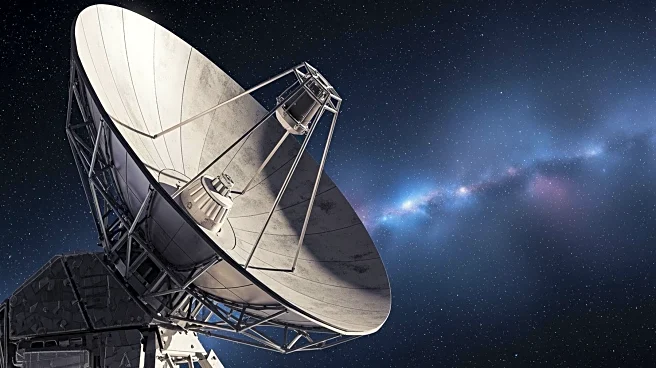
far beyond the limits of the solar system. The spacecraft is equipped with a 3.7-meter diameter high-gain Cassegrain antenna, which sends and receives radio waves via the Deep Space Network (DSN) on Earth. This system allows Voyager 1 to transmit data over vast distances, with signals taking more than 23 hours to reach Earth as of 2025.
Voyager 1's communication system operates on frequencies of 2.3 GHz or 8.4 GHz for data transmission, while signals from Earth are sent at 2.1 GHz. When direct communication is not possible, the spacecraft's digital tape recorder can store about 64 megabytes of data for later transmission. This robust communication setup ensures that Voyager 1 can continue to relay scientific data back to Earth, even as it ventures into interstellar space.
Power and Propulsion
Powering Voyager 1's long journey are three radioisotope thermoelectric generators (RTGs), which convert heat from the decay of plutonium-238 into electricity. At launch, these RTGs generated about 470 watts of electric power, with the output gradually declining over time due to the half-life of the fuel and degradation of the thermocouples. Despite this decline, the RTGs are expected to support some operations until at least 2025.
Voyager 1's propulsion system includes 16 hydrazine thrusters, which are part of the Attitude and Articulation Control Subsystem (AACS). These thrusters, along with three-axis stabilization gyroscopes, help maintain the spacecraft's orientation and keep its antenna pointed toward Earth. The AACS also includes redundant units and backup thrusters, ensuring the spacecraft can adjust its trajectory and orientation as needed.
Scientific Instruments and Data Collection
Voyager 1 is equipped with 11 scientific instruments designed to study celestial objects and the interstellar medium. These instruments have provided groundbreaking data on the weather, magnetic fields, and rings of Jupiter and Saturn, as well as detailed images of their moons. The spacecraft's instruments continue to collect data on the interstellar medium, offering insights into the environment beyond our solar system.
The spacecraft's computers, including the Flight Data Subsystem (FDS) and the Computer Command Subsystem (CCS), play a crucial role in managing data collection and transmission. The FDS controls the operation of the cameras and other instruments, while the CCS handles command decoding, fault detection, and spacecraft sequencing. These systems, though less advanced than modern technology, have proven remarkably reliable over the decades.
Voyager 1's technological innovations have allowed it to operate far beyond its original mission parameters. As it continues its journey through interstellar space, the spacecraft remains a symbol of human curiosity and the desire to explore the unknown. Its success is a testament to the ingenuity and foresight of the engineers and scientists who designed and built this remarkable probe.