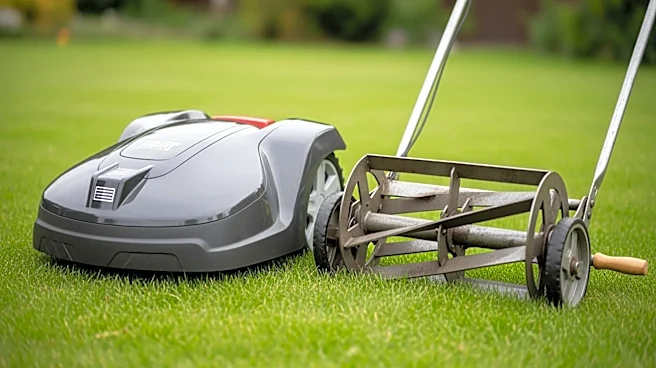








Lawn mowers have come a long way since their invention in the 19th century. Initially designed to replace the scythe, these machines have evolved significantly, incorporating new technologies and designs to meet the changing needs of users. From manual push mowers to sophisticated robotic models, the history of lawn mowers is a testament to human ingenuity and the desire for efficiency in maintaining lawns and gardens.
The Birth of the Lawn Mower
The lawn mower was invented in 1830
by Edwin Beard Budding in England. Budding's design was primarily intended for cutting grass on sports grounds and large gardens, offering a superior alternative to the scythe. His invention featured a frame made of wrought iron and a cutting cylinder powered by cast-iron gear wheels. This early model was pushed from behind, and its design laid the foundation for modern mowers.
Budding's invention quickly gained popularity, with two of the earliest machines sold to Regent's Park Zoological Gardens in London and the Oxford colleges. The success of Budding's mower led to the establishment of manufacturing agreements, allowing other companies to produce similar machines under license. This collaboration helped spread the use of lawn mowers, paving the way for further innovations.
Technological Advancements
Over the years, lawn mowers underwent significant technological advancements. In the 1850s, Thomas Green & Son introduced the Silens Messor, a mower that used a chain drive to transmit power, making it lighter and quieter than its predecessors. The rise of lawn sports further fueled the demand for efficient grass-cutting machines, leading to the development of steam-powered mowers in the late 19th century.
The 20th century saw the introduction of gasoline-powered mowers, with Ransomes producing the first model in 1902. These mowers offered greater power and efficiency, making them popular among homeowners and commercial users alike. The post-World War I era brought about the development of self-propelled mowers, further enhancing the ease of use and efficiency.
The Rise of Robotic Mowers
In recent years, the lawn mower industry has seen the emergence of robotic models. These autonomous machines are designed to operate with minimal human intervention, using sensors and boundary wires to navigate lawns. Robotic mowers have become increasingly sophisticated, with features such as self-docking and rain sensors, making them a convenient option for modern homeowners.
The introduction of robotic mowers represents a significant shift in lawn care technology, offering a glimpse into the future of automated home maintenance. As technology continues to advance, it is likely that lawn mowers will become even more efficient and user-friendly, further transforming the way we care for our outdoor spaces.