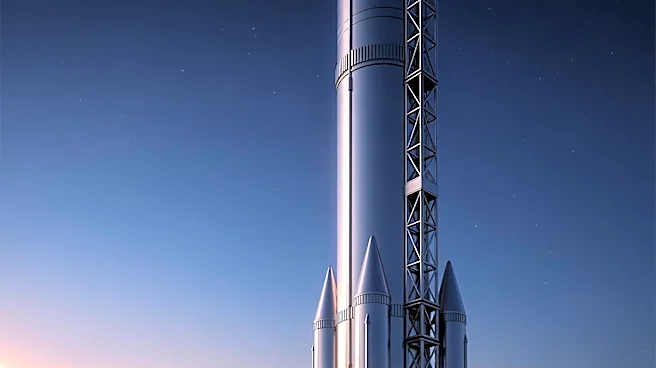



The Saturn V rocket stands as a monumental achievement in the history of space exploration, developed during the 1960s for NASA's Apollo program. This article delves into the historical development and design process of the Saturn V, highlighting the key decisions and innovations that led to its creation. As the most powerful rocket ever built, the Saturn V played a crucial role in launching humans to the Moon, marking a significant milestone in human spaceflight.
Early Design and Planning
The development of the Saturn V rocket was a complex process that began with the need for a powerful launch vehicle capable of carrying humans beyond low Earth orbit. The Saturn rocket family was named after the planet Saturn, evolving from the earlier Jupiter vehicles. Between 1960 and 1962, the Marshall Space Flight Center (MSFC) designed a series of Saturn rockets for Earth orbit and lunar missions. Initially, NASA planned to use a Saturn vehicle as part of the Earth orbit rendezvous method for a lunar mission.
The design process involved several iterations, starting with the Saturn C-3 rocket, which was just beginning development when the MSFC planned an even larger rocket, the Saturn C-4. This new design would use four F-1 engines in its first stage and five J-2 engines in its second stage. The need for a more powerful rocket led to the approval of the C-5 design, which would eventually become the Saturn V.
The All-Up Testing Approach
A significant decision in the development of the Saturn V was the adoption of the "all-up" testing approach. This method involved testing all components of the rocket simultaneously, rather than individually. By testing complete versions of all three stages at once, NASA could reduce the number of test flights required before a crewed launch. This approach was confirmed as NASA's choice for the Apollo program in mid-1962, and the C-5 was named the Saturn V in February 1963.
The all-up testing approach was a departure from traditional methods, which typically involved testing each major component separately. This decision was driven by the need to meet the ambitious timeline set by President John F. Kennedy's goal of landing a man on the Moon by the end of the decade. The first uncrewed test flight of the Saturn V occurred in November 1967, marking a significant milestone in the rocket's development.
Key Innovations and Contractors
The Saturn V's design incorporated several key innovations and involved multiple contractors. The rocket was designed under the direction of Wernher von Braun at the MSFC in Huntsville, Alabama. All engines were built by Rocketdyne, with Boeing constructing the kerolox S-IC first stage, North American Aviation building the hydrolox S-II second stage, and Douglas Aircraft Company developing the hydrolox S-IVB third stage. IBM and MSFC designed the rocket's instrument unit, which played a crucial role in guiding the rocket during its missions.
The Saturn V's three stages used liquid oxygen as the oxidizer, with the first stage using RP-1 for fuel and the second and third stages using liquid hydrogen. This combination of fuels provided the necessary thrust and energy efficiency for the rocket's missions. The Saturn V's design also included small solid-propellant ullage motors to ensure proper positioning of the liquid propellants during stage separation.
The development of the Saturn V rocket was a remarkable achievement, showcasing the ingenuity and collaboration of numerous engineers and contractors. Its successful design and testing paved the way for the Apollo missions, ultimately enabling humans to set foot on the Moon and return safely to Earth. The Saturn V remains a symbol of human exploration and technological advancement, representing a pivotal moment in the history of space travel.