

The Apollo program, a monumental effort by NASA to land humans on the Moon, began with a series of uncrewed test flights. Among these, AS-201 holds a special place as the first uncrewed test flight of the program. Launched on February 26, 1966, using a Saturn IB rocket, AS-201 was a critical step in validating the technology and systems that would eventually carry astronauts to the lunar surface. This article delves into the mission's objectives,
execution, and its role in the broader Apollo program.
Mission Objectives and Preparation
AS-201 was designed to test several key components of the Apollo spacecraft, particularly the command module's heat shield and the service module engine. These elements were crucial for ensuring the safety and success of future crewed missions. The command module's heat shield needed to withstand the intense heat of re-entry into Earth's atmosphere, while the service module engine was essential for maneuvering the spacecraft in space.
The mission preparation involved extensive testing and validation of the spacecraft's systems. Engineers and scientists worked tirelessly to ensure that the command and service modules were ready for the challenges of spaceflight. The Saturn IB rocket, a powerful launch vehicle, was chosen to propel the spacecraft into space, marking its first use in the Apollo program.
Execution of the AS-201 Mission
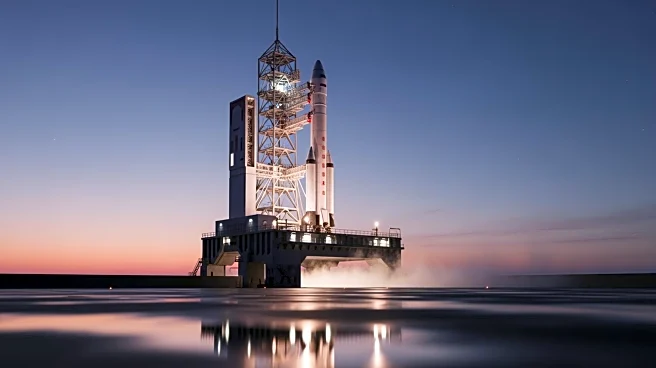
On February 26, 1966, AS-201 lifted off from Cape Kennedy, Florida. The launch was a significant milestone, as it marked the first time the Saturn IB rocket was used in the Apollo program. The mission's primary goal was to test the spacecraft's systems in a space environment, focusing on the command module's heat shield and the service module engine.
During the flight, the spacecraft reached a peak altitude of 265 miles and traveled at speeds of up to 17,500 miles per hour. The command module's heat shield successfully withstood the intense heat of re-entry, validating its design and construction. The service module engine also performed as expected, providing valuable data for future missions.
Impact and Legacy of AS-201
The successful completion of AS-201 was a crucial step in the Apollo program. It provided NASA with the confidence needed to proceed with more complex missions, eventually leading to the historic Apollo 11 Moon landing in 1969. The data collected from AS-201 helped engineers refine the spacecraft's design, ensuring the safety and success of future crewed missions.
AS-201's legacy extends beyond its technical achievements. It demonstrated the effectiveness of NASA's rigorous testing and validation processes, setting a standard for future space exploration endeavors. The mission's success paved the way for subsequent Apollo missions, each building on the knowledge and experience gained from AS-201.
In conclusion, AS-201 was a pivotal moment in the Apollo program, marking the beginning of a journey that would ultimately lead to humanity's first steps on the Moon. Its successful execution and the valuable data it provided were instrumental in shaping the future of space exploration.