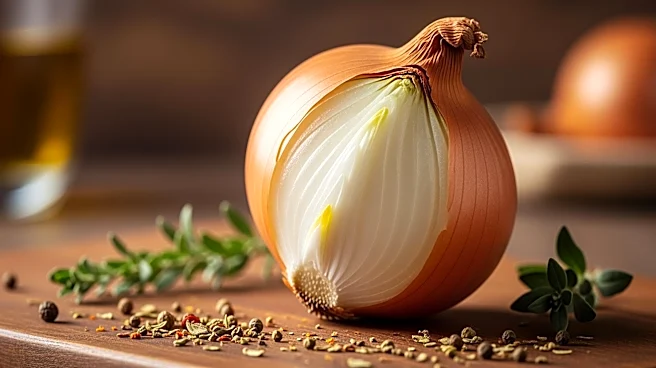







Onions, scientifically known as Allium cepa, are a staple in kitchens around the world. This versatile vegetable belongs to the genus Allium, which includes other well-known plants like garlic, scallions, leeks, and chives. Onions are primarily cultivated for their edible bulbs, which are used in a variety of culinary applications. This article delves into the botanical classification of onions and their widespread culinary uses.
Botanical Classification
The onion is a member
of the Amaryllidaceae family, specifically within the subfamily Allioideae. It is the most widely cultivated species of the genus Allium. The scientific name, Allium cepa, was first described by Carl Linnaeus in 1753. The onion's close relatives include garlic, scallion, leek, and chives, all of which share similar characteristics and uses.
Onions are typically biennial plants but are often grown as annuals. They have a fan of hollow, bluish-green leaves, and their bulbs begin to swell when a certain day-length is reached. The bulbs are composed of shortened, compressed, underground stems surrounded by fleshy modified scale leaves. These leaves envelop a central bud at the tip of the stem. As the onion matures, food reserves accumulate in the leaf bases, causing the bulb to swell.
Culinary Uses
Onions are a fundamental ingredient in many cuisines worldwide. They are often served raw as a vegetable or as part of a prepared savory dish. Onions can be eaten cooked, used to make pickles, or incorporated into chutneys. Their pungent flavor, which can irritate the eyes when chopped, adds depth and complexity to a wide range of dishes.
In addition to their use as a flavoring agent, onions can be the main ingredient in dishes such as French onion soup, creamed onions, and onion chutney. They are versatile and can be baked, boiled, braised, grilled, fried, roasted, sautéed, or eaten raw in salads. Onions are also a major ingredient in some curries, with the Persian-style dopiaza using onions both in the dish's sour curry sauce and as a garnish.
Varieties and Storage
There are several varieties of onions, including yellow, red, and white onions, each with its unique flavor profile and culinary applications. Yellow onions are the most commonly grown and are known for their strong flavor due to higher sulfur content. Red onions are often consumed raw for their mild, sweet flavor, while white onions are typically used in Mexican cuisine.
Onions should be stored in a cool, dry, and well-ventilated place to maintain their freshness. Sweet onions, which have a higher water and sugar content, have a shorter shelf life and should be stored in the refrigerator. Regardless of the type, cut onions should be tightly wrapped and used within a few days to prevent spoilage.