



Eclipses are fascinating astronomical events that capture the imagination of people worldwide. They occur when one celestial body moves into the shadow of another, creating a temporary obscuration. This alignment of three celestial objects is known as a syzygy. The most familiar types of eclipses are solar and lunar eclipses, but these events can occur in other celestial systems as well.
The Mechanics of Eclipses
An eclipse happens when an astronomical object or spacecraft
is temporarily obscured by passing into the shadow of another body or by having another body pass between it and the viewer. This can result in either an occultation, where the object is completely hidden, or a transit, where it is only partially hidden. A deep eclipse, or deep occultation, occurs when a smaller astronomical object is entirely behind a larger one.
The term "eclipse" is most commonly associated with solar and lunar eclipses. A solar eclipse occurs when the Moon's shadow crosses the Earth's surface, while a lunar eclipse happens when the Moon moves into the Earth's shadow. However, eclipses can also occur beyond the Earth-Moon system, such as when a planet moves into the shadow cast by one of its moons or when a moon passes into the shadow of its host planet.
Types of Solar Eclipses
Solar eclipses are relatively brief events that can only be viewed in totality along a narrow track. Under the most favorable circumstances, a total solar eclipse can last for 7 minutes and 31 seconds and can be viewed along a track up to 250 kilometers wide. The Moon's umbra, or shadow, advances eastward at a rate of 1,700 kilometers per hour until it no longer intersects the Earth's surface.
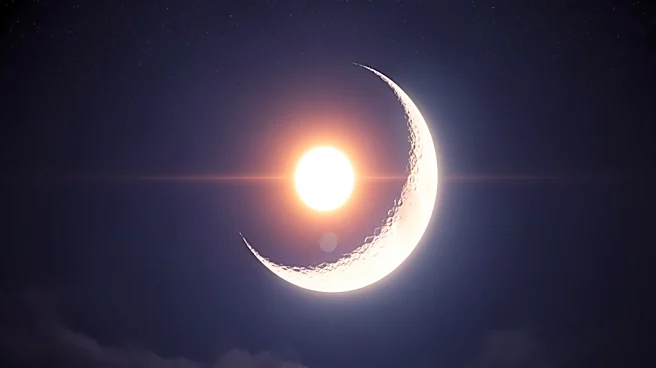
During a solar eclipse, the Moon can sometimes perfectly cover the Sun because its apparent size is nearly the same as the Sun's when viewed from Earth. A total solar eclipse is an occultation, while an annular solar eclipse is a transit. The type of solar eclipse that occurs depends on the apparent sizes of the Sun and Moon.
Lunar Eclipses and Their Visibility
Lunar eclipses occur when the Moon passes through the Earth's shadow, which can only happen during a full moon. Unlike solar eclipses, lunar eclipses can be observed from nearly an entire hemisphere, making them more common to witness from a given location. A lunar eclipse lasts longer, taking several hours to complete, with totality usually averaging from about 30 minutes to over an hour.
There are three types of lunar eclipses: penumbral, partial, and total. Even during a total lunar eclipse, the Moon is not completely dark. Sunlight refracted through the Earth's atmosphere enters the umbra and provides a faint illumination, often giving the Moon a reddish hue, which is why it is sometimes called a "Blood Moon."