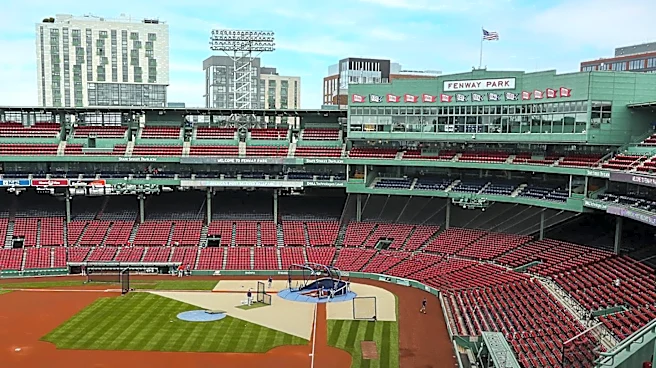









Fenway Park, located in Boston, Massachusetts, is a storied baseball stadium with a rich history dating back to its opening in 1912. As the oldest active ballpark in Major League Baseball, Fenway Park has undergone numerous changes and renovations while maintaining its iconic status. This article explores the historical evolution of Fenway Park, highlighting key milestones and transformations that have shaped its legacy.
Early Beginnings and Construction
Fenway Park was constructed
in 1912, during a time when the Boston Red Sox were still playing at the Huntington Avenue Grounds. The land for the new stadium was purchased by Red Sox owner John I. Taylor, who named it after the Fenway neighborhood in Boston. The park was designed by architect James E. McLaughlin and built by the Charles Logue Building Company. The first game at Fenway Park took place on April 20, 1912, with the Boston Red Sox defeating the New York Highlanders in an 11-inning game.
The construction of Fenway Park was part of a broader trend of building asymmetrical ballparks on irregularly shaped city blocks. This resulted in unique field dimensions and features, such as the Green Monster, Pesky's Pole, and The Triangle, which have become iconic elements of the park. Despite its quirks, Fenway Park quickly became a beloved venue for baseball fans.
Renovations and Modifications
Over the years, Fenway Park has undergone several renovations and modifications to enhance the fan experience and maintain the stadium's structural integrity. In 1934, the park was substantially rebuilt, and major renovations continued into the 21st century. These efforts were led by Janet Marie Smith, who is credited with preserving Fenway Park's historic charm while modernizing its facilities.
One of the most significant changes to Fenway Park was the addition of the Green Monster seats in 2003. This seating area atop the iconic left-field wall provided fans with a unique perspective of the game and became an instant hit. Other improvements included the expansion of seating capacity, the installation of new scoreboards, and the enhancement of concession areas.
Fenway Park's Cultural Impact
Fenway Park is not just a baseball stadium; it is a cultural landmark and a symbol of Boston. The park has hosted numerous World Series games, concerts, and other events, making it a versatile venue for various occasions. In 2012, Fenway Park was added to the National Register of Historic Places, further cementing its status as a historic site.
The park's unique features and storied history have made it a must-visit destination for baseball fans and tourists alike. Former Red Sox pitcher Bill Lee famously referred to Fenway Park as "a shrine," highlighting its significance in the world of sports. As a pending Boston Landmark, any future changes to the park will be carefully regulated to preserve its historical integrity.
Fenway Park's evolution over the past century reflects its enduring appeal and importance in the world of baseball. From its early days to its current status as a beloved sports venue, Fenway Park continues to captivate fans with its rich history and unique charm.