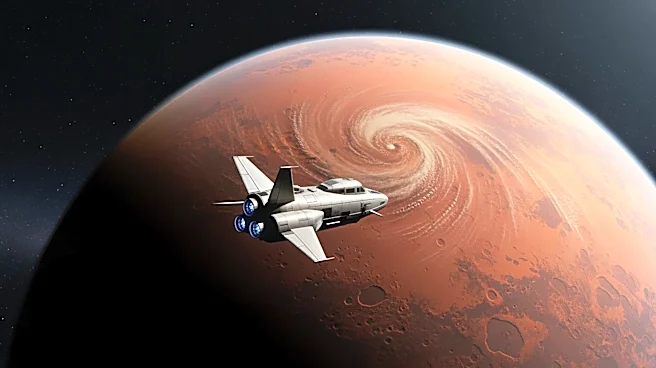

Mariner 9 holds a special place in the history of space exploration as NASA's first successful mission to orbit another planet. Launched in 1971, this robotic spacecraft was part of the Mariner program,
which aimed to explore the inner Solar System. Mariner 9's mission was groundbreaking, not only for its achievements in mapping Mars but also for its role in advancing our understanding of the Red Planet.
Launch and Arrival at Mars
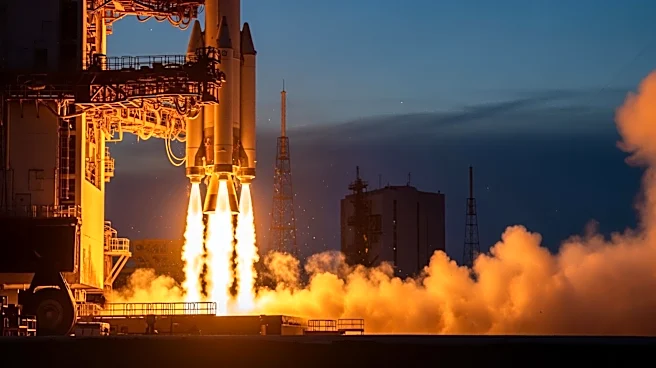
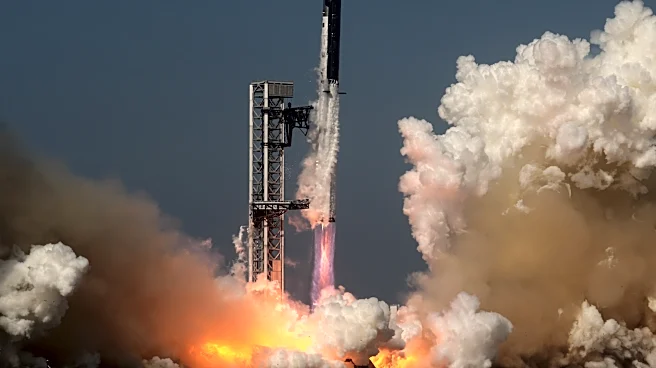
Mariner 9 was launched on May 30, 1971, from Cape Canaveral Air Force Station in Florida. The spacecraft embarked on a journey to Mars, reaching its destination on November 14, 1971. This achievement marked the first time a spacecraft had successfully entered orbit around another planet. Mariner 9 narrowly beat the Soviet probes Mars 2 and Mars 3, which arrived at Mars only weeks later.
Upon arrival, Mariner 9 faced an unexpected challenge. A massive dust storm enveloped the planet, obscuring its surface. This unforeseen event delayed the spacecraft's primary mission of capturing images of Mars. However, the mission team adapted by reprogramming Mariner 9's computer from Earth, allowing it to wait until the dust settled before beginning its imaging tasks.
Mapping Mars and Discoveries
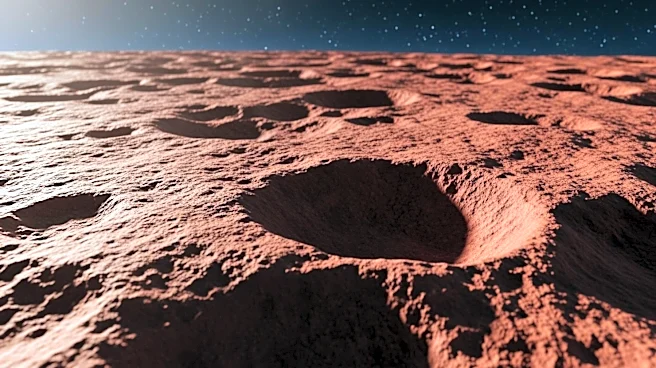
Once the dust storm subsided, Mariner 9 began its primary mission of mapping the Martian surface. Over the course of its mission, the spacecraft successfully returned 7,329 images, covering 85% of Mars's surface. These images provided unprecedented insights into the planet's geography, revealing features such as river beds, craters, and massive extinct volcanoes, including Olympus Mons, the largest known volcano in the Solar System.
Mariner 9's images also uncovered the Valles Marineris, a vast canyon system stretching over 4,020 kilometers. This discovery was so significant that the canyon system was named in honor of the spacecraft. Additionally, Mariner 9 captured images of Mars's two moons, Phobos and Deimos, further expanding our knowledge of the Martian system.
Legacy and Impact
Mariner 9's mission concluded on October 27, 1972, after the spacecraft depleted its supply of attitude control gas. Despite its relatively short operational period, Mariner 9's contributions to Mars exploration were profound. The data and images it collected laid the groundwork for future missions, including the Viking program, which further explored the Martian surface.
The success of Mariner 9 demonstrated the importance of orbiting missions in planetary exploration. It highlighted the need for flexible mission software and the ability to adapt to unexpected conditions. Mariner 9's achievements continue to inspire and inform current and future missions to Mars, cementing its legacy as a pioneer in space exploration.