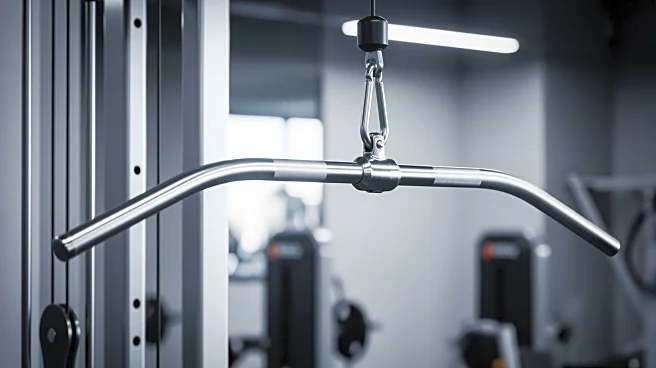

The lat pulldown is a popular strength training exercise that targets the latissimus dorsi muscle. This exercise is essential for those looking to develop their upper body strength, particularly in the back
and shoulders. It involves a specific movement that combines the downward rotation and depression of the scapulae with the adduction and extension of the shoulder joint. This article will explore the mechanics of the lat pulldown, the muscles involved, and the variations of this exercise.
Mechanics of the Lat Pulldown
The lat pulldown is typically performed using a cable machine. The exercise begins with the individual seated, thighs braced, and feet flat on the floor. The arms are extended overhead, grasping a bar connected to a weight stack. The movement is initiated by pulling the elbows down and back, lowering the bar to the neck, and then returning to the starting position. This motion is a compound movement that requires dynamic work by muscles surrounding the elbow, glenohumeral, and scapulothoracic joints in the shoulder girdle.
The exercise can also be performed using a leverage machine, but the cable machine is more common. The cable allows for a smooth, controlled motion, which is crucial for maintaining proper form and preventing injury. The weight moved can be adjusted to suit the individual's strength level, making it a versatile exercise for both beginners and advanced lifters.
Muscles Involved in the Lat Pulldown
The primary muscle targeted by the lat pulldown is the latissimus dorsi, which is responsible for the extension and adduction of the arm. This muscle bypasses the scapulae, unlike other muscles that perform similar functions. The lower sternal fibers of the pectoralis major also contribute to this movement, albeit to a lesser degree.
In addition to the latissimus dorsi, several other muscles are involved in the lat pulldown. These include the lower trapezius and pectoralis minor, which attach to and depress the scapulae. The rhomboid muscle and levator scapulae work in conjunction to perform the downward rotation of the scapulae. The biceps brachii, brachialis, and brachioradialis muscles are also active, improving leverage during the exercise.
Variations of the Lat Pulldown
There are several variations of the lat pulldown, each offering different benefits and challenges. One common variation is the behind-the-neck pulldown, where the bar is pulled behind the neck. However, this variation is considered dangerous and less effective, as it can cause compression of the cervical spine disks and potential rotator cuff injuries.
Other variations include changing the grip width or orientation. A pronated grip tends to result in the greatest activation of the latissimus dorsi, while a supinated grip allows the biceps to contribute more strongly as an elbow flexor. The exercise can also be performed with a narrow or wide grip, each affecting the muscle activation differently. These variations allow individuals to tailor the exercise to their specific needs and goals.