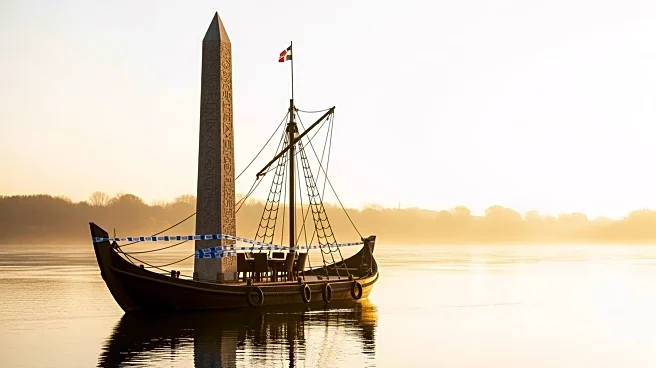




The transportation of Cleopatra's Needles from Egypt to London and New York City in the 19th century stands as a remarkable feat of engineering. These ancient obelisks, originally crafted in Heliopolis, were moved across continents, showcasing the ingenuity and determination of those involved in their relocation. The journey of these monumental structures is a testament to human innovation and the collaborative spirit of international relations.
The Challenge of Moving Obelisks
Cleopatra's
Needles, inscribed by Pharaoh Thutmose III and Pharaoh Ramesses II, are massive stone structures that weigh approximately 200 tons each. Their relocation from Alexandria to the Western world posed significant engineering challenges, requiring innovative solutions and considerable resources. The obelisks were gifts from Egypt, reflecting diplomatic ties and mutual interests between Egypt and the Western powers.
Transporting these obelisks involved complex logistics and custom-built ships designed to accommodate their size and weight. The London needle was sponsored by Sir William James Erasmus Wilson, while the New York needle was transported by Henry Honychurch Gorringe. Both individuals published books commemorating the transportation of the Needles, highlighting the engineering achievements and the collaborative efforts required for their successful relocation.
Innovative Solutions and Techniques
The transportation of Cleopatra's Needles required cutting-edge engineering techniques and meticulous planning. The obelisks were first shifted from vertical to horizontal positions, a delicate process that nearly resulted in disaster. Once horizontal, they were moved to Alexandria's port and loaded onto ships specially modified for the task. The SS Dessoug, which carried the New York needle, had a large hole cut into its hull to accommodate the obelisk, showcasing the lengths to which engineers went to ensure safe transport.
Despite challenges such as broken propellers and legal disputes, the obelisks were successfully transported across the seas. The London needle was placed on the Victoria Embankment, while the New York needle was erected in Central Park. These engineering feats were celebrated as symbols of human ingenuity and the collaborative spirit of international relations.
Legacy of Innovation
Today, Cleopatra's Needles stand as iconic landmarks in London and New York City, attracting visitors from around the world. Their successful transportation is a testament to the engineering prowess and determination of those involved in their relocation. As symbols of cultural exchange, these obelisks remind us of the enduring legacy of ancient Egypt and the connections between civilizations.
The journey of Cleopatra's Needles continues to inspire curiosity and appreciation for the rich tapestry of human history. Their presence in modern cities serves as a bridge between the past and the present, illustrating the power of innovation and the shared heritage that unites us all.