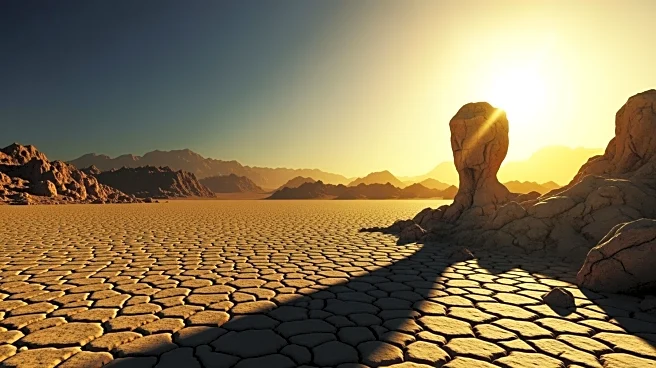




Death Valley is renowned for its extreme climate, which has earned it the title of one of the hottest places on Earth. Located in Eastern California, this desert valley experiences some of the most severe temperature variations and arid conditions found anywhere. This article explores the factors contributing to Death Valley's extreme climate and the impact these conditions have on the environment and its inhabitants.
Factors Contributing to Extreme Heat
Death Valley's extreme heat is
primarily due to its geographical and topographical features. The valley is situated in the rain shadow of four major mountain ranges, including the Sierra Nevada. As moist air from the Pacific Ocean rises over these mountains, it cools and loses moisture, resulting in little precipitation reaching Death Valley. This lack of rainfall contributes to the valley's arid conditions.
The valley's surface, composed of dark soil, rocks, and sand, undergoes intense solar heating, especially during the summer months when the sun is nearly directly overhead. The clear, dry air allows sunlight to heat the ground efficiently, leading to extremely high temperatures. Additionally, the valley's north-south orientation traps warm air, preventing it from escaping and causing it to be reheated as it circulates back to the valley floor.
Record-Breaking Temperatures
Death Valley holds the record for the highest ambient air temperature ever recorded on Earth. On July 10, 1913, a temperature of 134 °F was recorded at Furnace Creek, a record that still stands today. The valley frequently experiences summer temperatures exceeding 120 °F, with overnight lows providing little relief from the heat.
The valley's extreme temperatures are not limited to the summer months. Winter temperatures can also be warm, with average highs in December reaching 66 °F. However, the valley can experience freezing temperatures at night, with the lowest recorded temperature being 15 °F in January 1913.
Environmental Impact and Adaptations
The extreme climate of Death Valley presents significant challenges to both plant and animal life. The valley's arid conditions and high temperatures create a harsh environment where only the most resilient species can survive. Despite this, Death Valley is home to a surprising diversity of life, including over 600 species of plants and numerous animal species.
Plants in Death Valley have adapted to the harsh conditions by developing deep root systems to access groundwater and by reducing water loss through small or waxy leaves. Animals have also adapted, with many being nocturnal to avoid the heat of the day. The Death Valley pupfish, a species of fish found in the valley's springs, is a notable example of adaptation, having evolved to survive in the valley's saline waters.
In summary, Death Valley's extreme climate is a result of its unique geographical features and topography. The valley's record-breaking temperatures and arid conditions create a challenging environment that has shaped the adaptations of its plant and animal life. Despite its harshness, Death Valley remains a place of remarkable natural beauty and scientific interest.