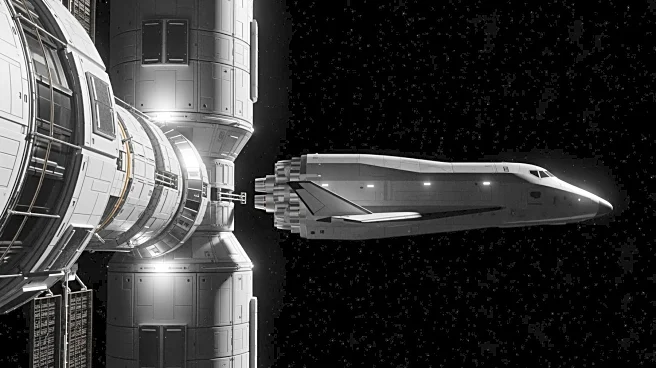


The STS-29 mission marked a significant chapter in NASA's Space Shuttle program, being the 28th mission overall and the eighth flight of the Space Shuttle Discovery. Launched on March 13, 1989, from Kennedy Space Center, Florida, this mission was pivotal in deploying the Tracking and Data Relay Satellite (TDRS-D) into Earth orbit. As the third shuttle mission following the Challenger disaster, STS-29 played a crucial role in restoring confidence in the Space Shuttle program and advancing
satellite communication capabilities.
Mission Overview
STS-29 was primarily focused on deploying the TDRS-D satellite, which was the third and final component of the Tracking and Data Relay Satellite System (TDRSS) constellation. This system was designed to enhance communication capabilities by providing continuous data relay services for NASA's space missions. The satellite was stationed in geosynchronous orbit over the equator, approximately 35,900 kilometers above Earth. The deployment of TDRS-D was a critical step in ensuring reliable communication for future space missions, including those involving the International Space Station.
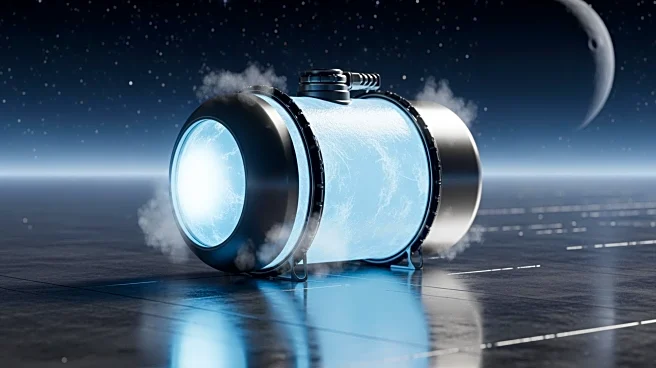
The mission faced technical challenges early on, with one of the cryogenic hydrogen tanks exhibiting erratic pressure fluctuations. This tank was crucial for supplying electricity-generating fuel cells on the shuttle. Engineers worked diligently to resolve the issue, and the tank was successfully reactivated on Flight Day 3, allowing the mission to proceed without further complications.
Crew and Achievements
The STS-29 mission was crewed by five astronauts: Michael Coats, John E. Blaha, Robert C. Springer, James Buchli, and James P. Bagian. Each member played a vital role in the success of the mission, contributing their expertise to various aspects of the flight and satellite deployment. The crew's ability to adapt to technical challenges and ensure the successful deployment of the TDRS-D satellite demonstrated the resilience and skill of NASA's astronauts.
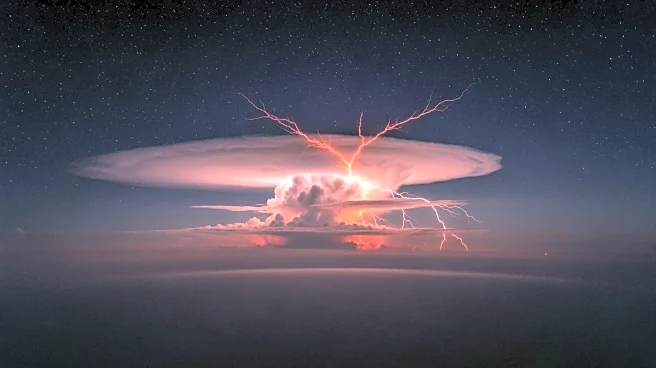
In addition to the primary payload, Discovery carried eight secondary payloads, including experiments from the Shuttle Student Involvement Program. These experiments aimed to study the effects of space flight on biological processes, such as bone healing and chicken embryo development. The mission also included an IMAX camera to capture footage for the 1990 film "Blue Planet," showcasing the impact of natural disasters on Earth.
Legacy and Impact
The successful completion of STS-29 reinforced the reliability of the Space Shuttle program and its ability to conduct complex missions. The deployment of the TDRS-D satellite significantly improved NASA's communication infrastructure, paving the way for more ambitious space endeavors. The mission's achievements in scientific research and satellite technology continue to influence space exploration today.
STS-29's legacy is a testament to the dedication and innovation of NASA's teams, highlighting the importance of overcoming challenges to achieve groundbreaking advancements in space technology. As part of the broader Space Shuttle program, STS-29 contributed to the foundation of modern satellite communication and space exploration capabilities.