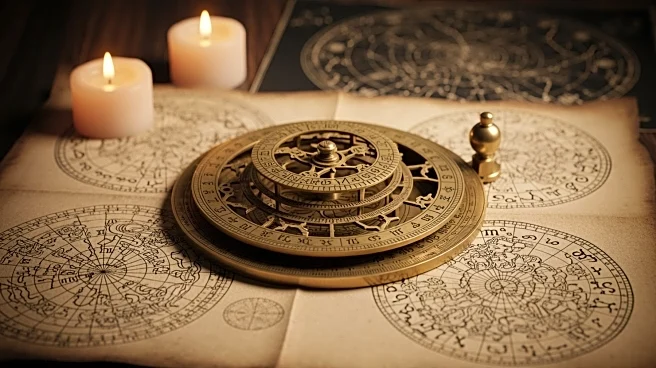

Astrology, a practice that has intrigued humanity for millennia, traces its roots back to ancient civilizations. This article explores the historical journey of astrology, highlighting its evolution across
different cultures and eras. From its origins in Mesopotamia to its spread across the globe, astrology has been a significant part of human history, influencing various aspects of life and thought.
Ancient Beginnings
Astrology's origins can be traced back to the 2nd millennium BCE in Mesopotamia, where it began as a calendrical system used to predict seasonal changes and interpret celestial cycles as divine communications. The Babylonians were among the first to develop a sophisticated understanding of celestial cycles, which they used to align temples and predict events. This early form of astrology was more about observing celestial events as signs rather than causes of earthly happenings.
As astrology spread to other cultures, it evolved into more complex systems. The Egyptians, for instance, developed Decanic astrology, which later merged with Babylonian astrology in Hellenistic Egypt to form horoscopic astrology. This new form of astrology included the zodiac and planetary exaltations, laying the groundwork for modern Western astrology.
Cultural Expansion
Astrology's influence expanded significantly with the conquests of Alexander the Great, which facilitated the spread of Babylonian astrology to Greece and Rome. In these cultures, astrology was often associated with wisdom and divination. The Greeks, in particular, played a crucial role in the development of astrology, integrating it with their own philosophical and scientific traditions.
In Rome, astrology was both popular and controversial. While some viewed it as a valuable tool for understanding human affairs, others, like the orator Cicero, criticized it for its lack of empirical evidence and its implications for free will. Despite such criticisms, astrology continued to thrive, influencing various aspects of Roman culture and politics.
Astrology in the Middle Ages and Beyond
During the Middle Ages, astrology was integrated into Islamic scholarship, where it was studied alongside astronomy and other sciences. Islamic scholars translated and preserved many astrological texts, which later found their way into Europe during the Latin translations of the 12th century. This period saw a resurgence of interest in astrology, with figures like Johannes Kepler and Galileo Galilei practicing it alongside their astronomical work.
Astrology's popularity waned during the Enlightenment as new scientific concepts challenged its validity. However, it experienced a revival in the 19th and 20th centuries, influenced by the rise of spiritualism and New Age philosophies. Today, astrology remains a popular, albeit controversial, practice, continuing to captivate the imagination of many around the world.