



The Neva Masquerade is a fascinating breed of cat that originates from Russia. Known for its striking appearance and unique characteristics, this breed is a colorpoint variant of the Siberian cat. The Neva Masquerade has gained recognition in various cat fancier organizations, and its distinct features make it a beloved choice among cat enthusiasts. This article delves into the origins, physical traits, and classification debates surrounding the Neva Masquerade.
Origins and Development
The Neva Masquerade cat traces its roots back to Russia, where it emerged as a sister breed to the Siberian cat. The breed's name is derived from the Neva River in St. Petersburg, which is believed to be the area of its origin. The Neva Masquerade is a result of crossing Siberian cats with Asian colorpointed cats, such as the Siamese or Himalayan. This intentional breeding introduced the Siamese colorpoint gene into the Siberian breed, leading to the development of the Neva Masquerade.
The colorpoint variety of the Neva Masquerade did not appear until the late 20th century, specifically during the 1970s and 1980s. As the Siberian cat was introduced to Western Europe and the United States, both traditional Siberians and colorpointed Neva Masquerades were presented. The breed gained recognition in 2006 by major cat fancier organizations, although some registries chose to classify the Neva Masquerade as a separate breed.
Physical Characteristics
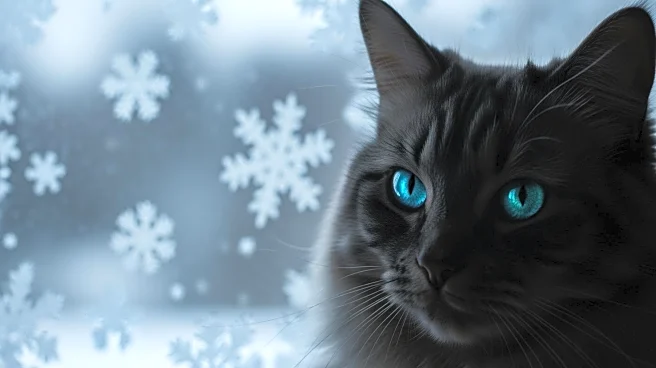
The Neva Masquerade is known for its striking appearance, characterized by blue eyes and darker point markings on its head, legs, and tail. These markings are a result of the Siamese colorpoint gene, which is heat-sensitive and leads to darker pigmentation on cooler body parts. The breed's coat is semi-long to long, with a dense triple-coat that includes guard hair, awn hair, and down hair. This coat provides protection against harsh weather conditions.
Neva Masquerades are medium to large-sized cats with muscular builds and bushy tails. They are agile jumpers, thanks to their strong hindquarters and slightly longer hind legs. The breed's face features a broad forehead, full-rounded muzzle, and large, round eyes that give a sweet expression. The ears are medium-sized, broad at the base, and rounded at the tip.
Classification and Debates
The classification of the Neva Masquerade has been a topic of debate among breeders, enthusiasts, and cat registries. Some organizations, such as TICA and CFA, accept the Neva Masquerade as a natural coat color within the Siberian breed. However, other registries, including FIFe and WCF, classify it as a separate breed. This debate highlights the complexities of breed classification and the varying perspectives within the cat fancier community.
Despite these debates, the Neva Masquerade remains a popular and cherished breed. Its unique characteristics and striking appearance continue to captivate cat lovers worldwide. As research on the breed continues, further insights into its genetic makeup and health concerns may emerge, contributing to a deeper understanding of this fascinating Russian cat breed.