
Push-ups are a classic exercise that effectively engages multiple muscle groups, making them a cornerstone of many fitness routines. While they are often associated with building chest strength, push-ups
also work several other muscles, contributing to overall upper body development. This article explores the various muscles involved in push-ups and their specific roles during the exercise.
Primary Muscles Targeted
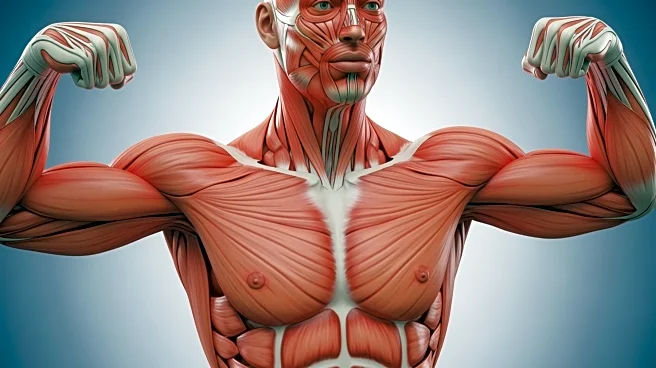
The primary muscles targeted during push-ups are the pectoral muscles, triceps, and anterior deltoids. The pectoralis major and minor, located in the chest, are the main muscles responsible for the pushing motion. As the body is lowered and raised, these muscles contract and extend, providing the force needed to perform the exercise.
The triceps brachii, located at the back of the upper arm, play a crucial role in extending the elbow joints during the upward phase of a push-up. This muscle group is essential for achieving full arm extension and controlling the speed of movement during the downward phase. The anterior deltoids, part of the shoulder muscles, assist in moving the upper arms toward the chest, further contributing to the push-up's effectiveness.
Supporting and Stabilizing Muscles
In addition to the primary muscles, push-ups engage several supporting and stabilizing muscles. The rectus abdominis and transversus abdominis, part of the core, contract to keep the body aligned and off the floor. These muscles help maintain a straight posture, ensuring that the exercise is performed correctly.
The erector spinae, a group of muscles running along the spine, act as stabilizers during push-ups. They help maintain the body's alignment and prevent sagging of the lower back. Additionally, the gluteus medius and minimus stabilize the upper leg, while the forearm and wrist muscles work isometrically to support the body's weight.
Variations and Muscle Emphasis
Different push-up variations can emphasize specific muscle groups. For example, diamond push-ups place greater stress on the triceps, while wide-arm push-ups focus more on the chest. These variations allow individuals to target particular muscles, enhancing the overall effectiveness of their workout.
Understanding the muscle engagement in push-ups can help individuals optimize their exercise routines. By focusing on proper form and incorporating different variations, one can ensure that all relevant muscle groups are effectively worked, leading to balanced muscle development and improved strength.