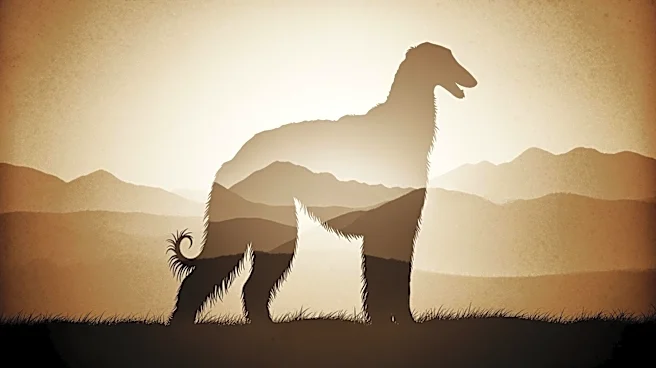







The Afghan Hound is a breed with a rich history that traces back to the cold mountains of Afghanistan. Known for its distinctive thick, fine, and silky coat, this breed has been admired for centuries. The Afghan Hound's journey from the rugged terrains of Afghanistan to becoming a beloved pet and show dog worldwide is a fascinating tale of adaptation and survival.
Origins in Afghanistan
The Afghan Hound's origins are deeply rooted in the mountainous regions of Afghanistan,
where it was initially used for hunting. Known locally as Sag-e Tazi or Tazi, this breed was adept at hunting wolves, foxes, and gazelles. Its thick coat provided protection against the harsh mountain climate, while its large paw-pads acted as shock absorbers on rocky terrains. The Afghan Hound's ability to navigate the rugged landscape made it an invaluable companion for hunters.
The breed's history is intertwined with the cultural and geographical landscape of Afghanistan. The Afghan Hound's coat colors, often fawn, ivory, or white with a darker saddle, are said to blend seamlessly with the khaki sandstone and limestone of the Hindu Kush mountains. This natural camouflage was essential for its role as a hunting dog in the region.
Introduction to the Western World
The Afghan Hound's journey to the Western world began in the 19th century when British army officers returning from British India brought various sighthounds to England. These dogs, including the Afghan Hound, were exhibited at early dog shows under different names, such as Barukzy hounds and Persian Greyhounds. One notable dog, Zardin, was brought from India in 1907 and became the early ideal for the breed type.
The breed's popularity grew as it was showcased in dog shows, and its unique appearance captured the attention of dog enthusiasts. The Afghan Hound's regal demeanor and striking coat made it a favorite among dog show judges and spectators alike.
Modern Developments and Recognition
In the 20th century, the Afghan Hound's development continued with the establishment of two main strains: the Bell-Murray strain and the Ghazni strain. The Bell-Murray strain, brought to Scotland in 1920, was of the steppe or desert type, while the Ghazni strain, developed in Kabul, was more heavily coated and suited for mountainous regions.
These strains were eventually mixed, leading to the modern Afghan Hound breed. The breed standard was formalized in 1948, and the Afghan Hound gained recognition from major kennel clubs worldwide. Today, the Afghan Hound is celebrated for its beauty and grace, often seen in dog shows and as a cherished pet.
The Afghan Hound's historical journey from the mountains of Afghanistan to the show rings of the Western world is a testament to its enduring appeal and adaptability. Its rich history and unique characteristics continue to captivate dog lovers around the globe.