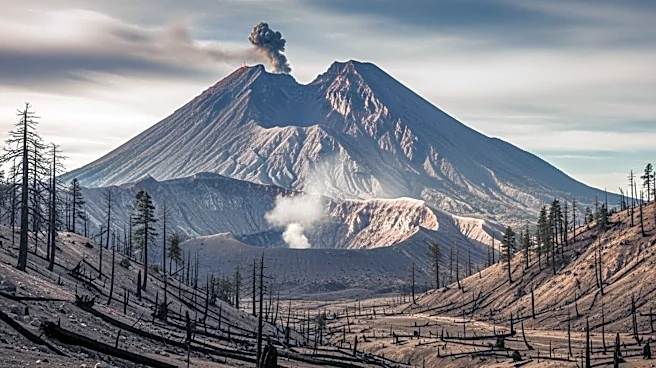






The 1980 eruption of Mount St. Helens stands as one of the most significant volcanic events in U.S. history. Occurring on May 18, 1980, this eruption was not only catastrophic in terms of its immediate impact but also in its long-term effects on the surrounding environment and communities. The eruption was preceded by a series of warning signs, including earthquakes and steam-venting episodes, which culminated in a massive explosion that reshaped
the landscape and claimed numerous lives.
Build-up to the Eruption
Mount St. Helens had been dormant since the 1850s, but this period of inactivity ended in March 1980 when a series of small earthquakes began to shake the area. These tremors indicated that magma was moving beneath the volcano, a precursor to potential eruptive activity. On March 20, a significant 4.2-magnitude earthquake struck, signaling the volcano's reawakening after 123 years of dormancy.
As the days progressed, the frequency and intensity of the earthquakes increased, with a notable 5.1-magnitude quake occurring on March 27. This seismic activity was accompanied by steam explosions that ejected ash and rock from the summit crater, creating a new crater and a fracture system on the mountain's north slope. These events were clear indicators that Mount St. Helens was gearing up for a major eruption.
The Climactic Eruption
On the morning of May 18, 1980, a magnitude 5.1 earthquake triggered the largest subaerial landslide in recorded history. The entire north face of Mount St. Helens collapsed, releasing the pressure on the magma chamber and resulting in a massive lateral blast. This explosion sent a column of ash and gas 80,000 feet into the atmosphere, spreading volcanic material across 11 U.S. states and several Canadian provinces.
The eruption was devastating, with pyroclastic flows racing down the mountain at speeds of up to 670 mph. These flows, composed of hot gases, ash, and volcanic debris, obliterated everything in their path, flattening forests and destroying infrastructure. The thermal energy released during the eruption was equivalent to 26 megatons of TNT, highlighting the sheer power of the event.
Aftermath and Impact
The eruption of Mount St. Helens had far-reaching consequences. Fifty-seven people lost their lives, including volcanologist David A. Johnston, who was stationed at an observation post just six miles from the volcano. The eruption also caused over $1 billion in property damage, equivalent to $3.5 billion in 2024 dollars, and left hundreds of square miles of land reduced to wasteland.
In addition to the human and economic toll, the eruption had a significant impact on the environment. Thousands of animals perished, and the landscape was dramatically altered, with the mountain losing 1,300 feet of its height and a massive crater forming on its north side. The eruption also led to the formation of the Mount St. Helens National Volcanic Monument, preserving the area for scientific study and public education.
The 1980 eruption of Mount St. Helens remains a pivotal event in the study of volcanology, providing valuable insights into the behavior of active volcanoes and the potential risks they pose to human populations. The lessons learned from this disaster continue to inform volcanic monitoring and emergency response efforts worldwide.