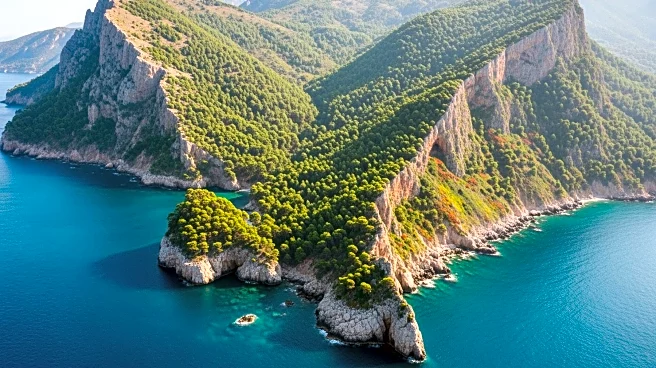

Corsica, the fourth-largest island in the Mediterranean, is renowned for its stunning landscapes and rich biodiversity. From its mountainous terrain to its coastal regions, Corsica offers a diverse array
of ecological zones that contribute to its unique natural beauty. This article delves into the geographic features and ecological diversity of Corsica, showcasing the island's environmental significance.
Mountainous Terrain
Corsica is often described as a "mountain in the sea," with two-thirds of the island covered by a single chain of mountains. Monte Cinto, the highest peak, rises to 2,706 meters, and there are around 120 other summits exceeding 2,000 meters. This rugged terrain is a defining feature of Corsica, offering breathtaking views and challenging hiking trails.
The mountainous regions are home to diverse forests, which make up 20% of the island's area. These forests are primarily composed of oak, pine, and broadleaf deciduous trees, providing habitats for various wildlife species. The Parc Naturel Régional de Corse, established in 1972, protects rare animal and plant species, including the European mouflon and Corsican red deer.
Coastal and Marine Environments
Corsica boasts 1,000 kilometers of coastline, with more than 200 beaches and numerous coves. The coastal regions are characterized by a hot-summer Mediterranean climate, with mild winters and hot, dry summers. The Tyrrhenian-Adriatic sclerophyllous and mixed forests ecoregion dominates the coastal lowlands, featuring evergreen sclerophyll oaks.
The island's marine environment is equally diverse, with the Strait of Bonifacio separating Corsica from Sardinia. The waters around Corsica are home to a variety of marine life, including dolphins, sea turtles, and numerous fish species. The Scandola Nature Reserve, a UNESCO World Heritage Site, is a prime example of Corsica's commitment to preserving its marine biodiversity.
Ecological Zones and Biodiversity
Corsica is divided into four major ecological zones based on altitude. The coastal zone, below 600 meters, features Mediterranean forest and scrubland. The temperate montane zone, between 600 and 1,800 meters, supports diverse forests typical of northern Europe. The subalpine zone, located between 1,750 and 2,100 meters, is characterized by small trees and shrubs.
The high alpine zone, above 1,800 meters, is sparsely vegetated due to high winds and frequent cloud cover. This zone is uninhabited, but it plays a crucial role in the island's overall biodiversity. Corsica's diverse ecosystems support a wide range of birdlife, reptiles, and amphibians, making it a haven for nature enthusiasts.
Corsica's geographic and ecological diversity is a testament to its natural beauty and environmental significance. The island's commitment to preserving its unique landscapes and biodiversity ensures that future generations can continue to enjoy its stunning vistas and rich wildlife.