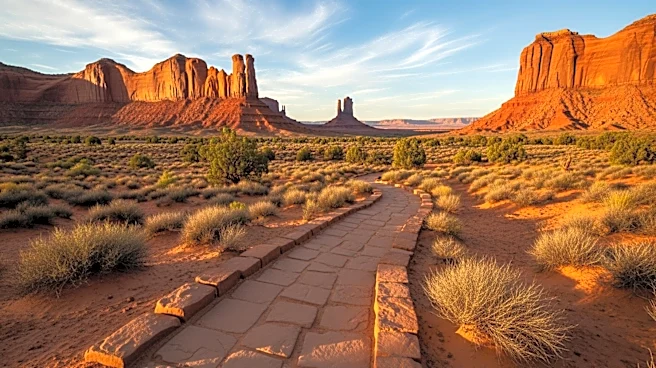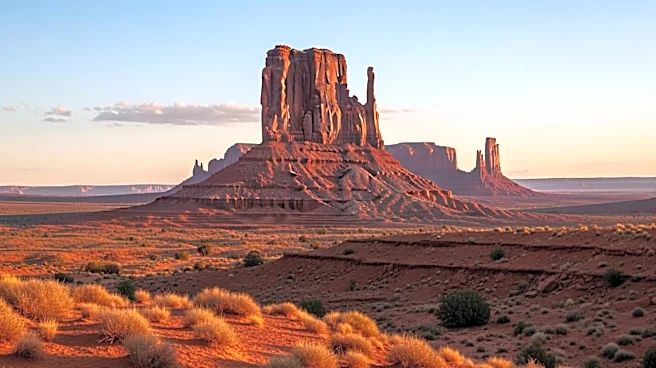

Monument Valley, known as Tsé Bii' Ndzisgaii in Navajo, meaning "valley of the rocks," holds profound cultural and spiritual significance for the Navajo Nation. This iconic landscape, located on the Arizona-Utah
border, is not only a natural wonder but also a sacred site deeply embedded in Navajo traditions and beliefs.
A Sacred Landscape
For the Navajo people, Monument Valley is more than just a picturesque location; it is a sacred landscape that embodies their cultural heritage and spiritual beliefs. The valley's towering sandstone buttes and mesas are seen as living entities, each with its own story and significance. These formations are often named after animals, people, or symbols that hold meaning in Navajo culture, such as "The Grand Chief," "The Eagle," and "The Three Sisters."
The Navajo believe that the spirits of their ancestors inhabit the valley, and it is a place where they can connect with their past and draw strength from the land. The valley's natural beauty and tranquility provide a setting for reflection and spiritual renewal, making it an essential part of Navajo life.
Preservation of Traditions
The Navajo Nation has taken steps to preserve the cultural and spiritual significance of Monument Valley. The area is managed as part of the Navajo Tribal Park, which allows the Navajo people to maintain control over the land and protect it from external influences. This management ensures that the valley remains a place where Navajo traditions can be practiced and passed down to future generations.
Visitors to Monument Valley are encouraged to explore the area with Navajo guides, who can provide insights into the cultural and historical importance of the land. These guided tours offer a unique opportunity to learn about Navajo customs and beliefs, fostering a deeper understanding and appreciation of the valley's significance.
A Living Cultural Heritage
Monument Valley continues to be a living cultural heritage for the Navajo people. It serves as a backdrop for traditional ceremonies and gatherings, where Navajo customs are celebrated and shared. The valley's enduring presence in Navajo culture is a testament to the resilience and strength of the Navajo Nation.
As visitors explore Monument Valley, they are invited to respect and honor the cultural significance of this sacred landscape. By doing so, they contribute to the preservation of Navajo traditions and help ensure that the valley remains a place of spiritual and cultural importance for generations to come.