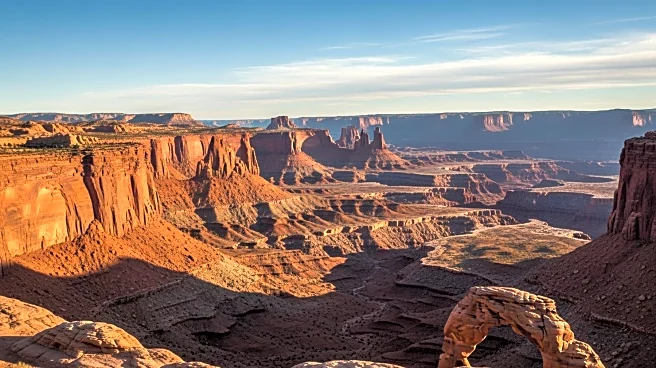




Canyonlands National Park, located in southeastern Utah, is a testament to the natural beauty and geological diversity of the region. Established in 1964, the park covers 337,598 acres and is renowned for its stunning canyons, mesas, and buttes. The journey to its establishment was marked by exploration, advocacy, and legislative efforts that spanned over a decade.
Early Exploration and Advocacy
In the early 1950s, Bates Wilson, then superintendent of Arches National Monument, began
exploring the areas south and west of Moab, Utah. His explorations led him to the Needles District, a region characterized by its unique rock formations. Wilson was captivated by the landscape and began advocating for the creation of a new national park that would include the Needles. His vision was to preserve the natural beauty and geological features of the area for future generations.
Wilson's advocacy gained momentum as he continued to explore the region. His efforts were supported by other explorers and conservationists who recognized the significance of the landscape. The proposal for a new national park began to take shape, with the inclusion of the confluence of the Green and Colorado rivers, the Maze District, and Horseshoe Canyon. These areas were chosen for their unique geological features and the potential for recreational activities.
Legislative Efforts and Challenges
The journey to establish Canyonlands National Park was not without its challenges. In 1961, Secretary of the Interior Stewart Udall flew over the confluence of the Colorado and Green rivers, sparking his interest in Wilson's proposal. Udall became a key advocate for the park's establishment, promoting the idea to Congress and the public.
Utah Senator Frank Moss introduced legislation to create the park, attempting to balance the interests of nature preservationists and commercial developers. Over the next few years, the proposal faced numerous debates, revisions, and reintroductions in Congress. The process was marked by political compromise, as stakeholders sought to protect the area's natural beauty while accommodating economic interests.
The Birth of a National Park
After years of advocacy and legislative efforts, President Lyndon B. Johnson signed the legislation establishing Canyonlands National Park on September 12, 1964. Bates Wilson, often referred to as the "Father of Canyonlands," became the park's first superintendent. His vision and dedication were instrumental in the park's creation, ensuring the preservation of its unique landscapes.
The establishment of Canyonlands National Park marked a significant milestone in the conservation of America's natural heritage. Today, the park continues to attract visitors from around the world, offering a glimpse into the geological history and natural beauty of southeastern Utah. The park's creation is a testament to the power of advocacy and the importance of preserving natural landscapes for future generations.