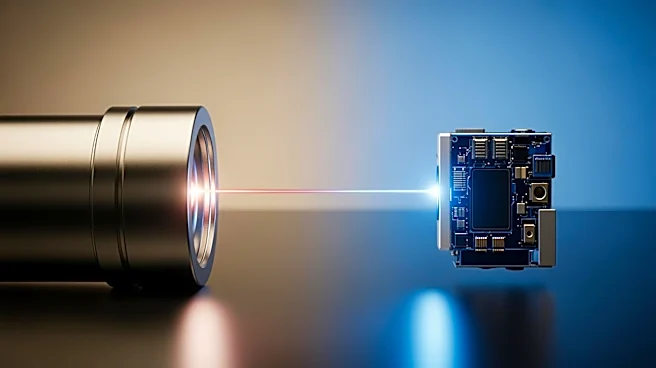




Since Theodore Maiman's invention of the first laser in 1960, laser technology has undergone significant evolution and diversification. Maiman's initial design using a synthetic ruby crystal paved the way for a multitude of laser types, each optimized for different applications and performance goals. This article explores the journey of laser technology from its inception to its current state, highlighting key developments and innovations.
Early Developments and Innovations
The first
laser operated by Theodore Maiman was a ruby laser, which produced red laser light at 694 nanometers. This invention was quickly followed by the development of the first gas laser later in 1960, constructed by Ali Javan, William R. Bennett Jr., and Donald R. Herriott. Their helium-neon laser was capable of continuous operation in the infrared, marking a significant advancement in laser technology.
In 1962, Robert N. Hall demonstrated the first semiconductor laser, made of gallium arsenide, which emitted in the near-infrared band. This was a crucial step in the evolution of lasers, as semiconductor lasers are now widely used in consumer electronics and communication systems. The development of the carbon-dioxide laser by C. Kumar N. Patel in 1964 further expanded the applications of lasers, particularly in industrial and medical fields.
Diversification of Laser Types
Over the years, laser technology has diversified into various types, each serving specific purposes. Gas lasers, such as the helium-neon and carbon-dioxide lasers, are used in applications ranging from cutting and welding to medical treatments. Solid-state lasers, including the Nd:YAG and ruby lasers, are employed in research and industrial processes.
Fiber lasers and semiconductor lasers have become increasingly popular due to their efficiency and versatility. Fiber lasers, which guide light through optical fibers, are used in telecommunications and material processing. Semiconductor lasers, or laser diodes, are integral to devices like CD/DVD players and laser printers, showcasing the widespread adoption of laser technology in everyday life.
Current Trends and Future Prospects
Today, laser research continues to push the boundaries of technology, focusing on improving aspects such as wavelength bands, power efficiency, and cost reduction. Recent innovations include the development of white lasers and microwave lasers, which offer new possibilities for applications in quantum computing and other advanced fields.
The future of laser technology looks promising, with ongoing research aimed at enhancing performance and expanding applications. As lasers become more efficient and accessible, their role in technology and industry is expected to grow, continuing the legacy of innovation that began with Theodore Maiman's groundbreaking invention.