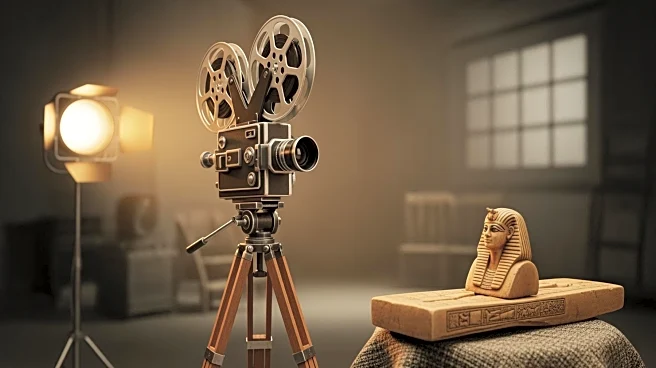

The Mummy, released in 1932, is a classic horror film that has captivated audiences for decades. Directed by Karl Freund and starring Boris Karloff, the film's production was a journey filled with creativity
and challenges. This article delves into the making of The Mummy, exploring the development, filming, and special effects that brought this iconic film to life.
Development and Conceptualization
The Mummy's journey began with producer Carl Laemmle Jr., who was inspired by the opening of Tutankhamun's tomb and the alleged "curse of the pharaohs." He commissioned story editor Richard Schayer to find a novel for an Egyptian-themed horror film. Although no suitable novel was found, Schayer and writer Nina Wilcox Putnam developed a treatment based on the historical occultist Alessandro Cagliostro.
John L. Balderston, who had contributed to Dracula and Frankenstein, was hired to write the screenplay. Balderston moved the story to Egypt and renamed the film's title character Imhotep, after the historical architect. He crafted a narrative focused on Imhotep's quest to revive his lover, adding depth to the horror elements.
Filming and Challenges
Filming The Mummy presented several challenges, particularly in creating the iconic mummy makeup. Make-up artist Jack Pierce studied photos of Seti I's mummy to design Imhotep's look. The process was arduous, with Boris Karloff spending hours in makeup, wrapped in linen bandages treated with acid and burnt in an oven. Karloff described the experience as "the most trying ordeal I [had] ever endured."
Director Karl Freund, known for his work on Dracula, brought his expertise to The Mummy, making it his first film as a director in the United States. Freund's vision and attention to detail helped create the film's eerie atmosphere, contributing to its success.
Special Effects and Historical Accuracy
The Mummy's special effects were groundbreaking for its time, particularly the resurrection scene. The film used a combination of practical effects and innovative techniques to bring Imhotep to life. The Scroll of Thoth, a fictional artifact, played a central role in the plot, adding an aura of authenticity to the story.
While the film took creative liberties with Egyptian mythology, it incorporated elements like the goddess Isis resurrecting Osiris. The portrayal of mummification and curses added to the film's mystique, despite historical inaccuracies regarding ancient Egyptian beliefs.
The making of The Mummy was a cinematic journey that combined creativity, innovation, and dedication. The film's production challenges and achievements contributed to its status as a classic, influencing horror cinema for generations.