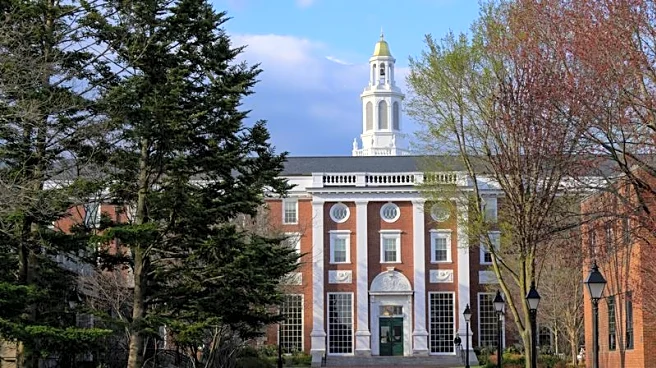




Harvard University has long been a leader in educational reform, influencing the development of higher education in the United States and beyond. From its early curriculum changes to its modern innovations, Harvard has consistently pushed the boundaries of academic excellence. This article explores Harvard's role in educational reform, highlighting key changes and their impact on the broader educational landscape.
Early Curriculum Innovations
In the 19th century, Harvard began
to shift away from its traditional religious curriculum, embracing Enlightenment ideas of reason and free will. This transition was marked by the appointment of Henry Ware as Hollis Professor of Divinity in 1805, signaling a move towards more liberal and Arminian ideas. Under President Charles William Eliot, Harvard further secularized its curriculum, opening it to student self-direction and reducing the favored position of Christianity.
Eliot's tenure from 1869 to 1909 was particularly transformative, as he introduced elective courses and expanded the university's professional schools. These changes helped Harvard evolve into a modern research university, setting a precedent for other institutions to follow.
Harvard's Influence on Professional Education
Harvard's development of professional schools was a significant milestone in educational reform. The establishment of schools of medicine, law, and business transformed Harvard into a comprehensive university, offering specialized training in various fields. This model of professional education became a standard for universities across the country, emphasizing the importance of specialized knowledge and research.
The case method of teaching law, developed by Dean Christopher Columbus Langdell in the 1870s, revolutionized legal education. By treating law as a science, Langdell's approach provided a distinct pedagogical model that was widely adopted by other law schools, further cementing Harvard's influence on professional education.
Modern Innovations and Global Impact
In the 20th century, Harvard continued to lead educational reform, expanding its curriculum to include international law and problem-solving workshops. The introduction of the Honors/Pass/Low Pass/Fail grading system in the 2000s reflected Harvard's commitment to fostering a collaborative learning environment.
Harvard's global reach is evident in its numerous research centers and international collaborations. The university's emphasis on interdisciplinary research and its extensive library system have made it a hub for academic inquiry, attracting scholars from around the world.
Through its ongoing innovations and commitment to excellence, Harvard University remains a beacon of educational reform, shaping the future of higher education and inspiring institutions worldwide.