





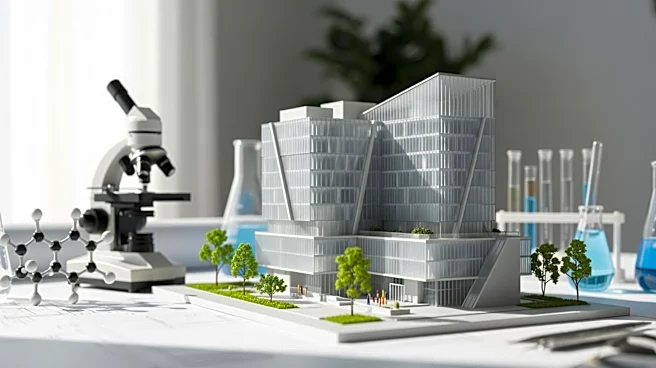


The Massachusetts Institute of Technology (MIT) is renowned for its emphasis on interdisciplinary collaboration and innovation. This commitment is reflected in the design and layout of its campus, which encourages interaction and synergy among different academic disciplines. From the Infinite Corridor to strategically placed cafes, MIT's campus is designed to break down barriers and foster collaboration.
The Infinite Corridor and Spatial Layout
One of the most iconic features of MIT's campus
is the Infinite Corridor, a long passageway that connects many of the main buildings. This corridor is not just a busy thoroughfare but also a space where people from different departments cross paths daily. Its design helps break down departmental barriers and encourages informal exchanges, fostering a culture of collaboration.
Research at MIT has shown that physical proximity among colleagues is associated with more co-authored publications and patents. The spatial layout of the campus, with its extensive corridors and interconnected buildings, supports this by enabling frequent interactions and chance encounters. This design philosophy is rooted in the belief that innovation often arises from unexpected discoveries and productive accidents.
Interdisciplinary Spaces and Cafes
MIT's campus also features several interdisciplinary spaces designed to encourage collaboration. The Stata Center, for example, is home to multiple research and teaching groups, with large atriums and communal work areas that promote spontaneous discussions. This approach is inspired by Building 20, a flexible space known for sparking collaborations between different labs.
Cafes located near laboratories further reinforce this dynamic. These informal spaces provide opportunities for researchers to share ideas freely, without the usual hierarchy of formal meetings. By creating environments conducive to serendipity, MIT fosters a culture of innovation and creativity.
The Role of Architecture in Collaboration
MIT's architectural design plays a crucial role in supporting interdisciplinary collaboration. The campus is organized to facilitate interaction, with buildings and spaces that encourage movement and communication. This is evident in the placement of cafes, the design of the Infinite Corridor, and the layout of interdisciplinary spaces like the Stata Center.
The emphasis on collaboration is not just about physical proximity but also about creating a culture that values and supports interdisciplinary work. MIT's campus design reflects this commitment, providing the infrastructure and environment needed to foster innovation and productivity.
In conclusion, MIT's campus is a testament to the power of design in promoting interdisciplinary collaboration. By creating spaces that encourage interaction and breaking down barriers between disciplines, MIT continues to lead the way in innovation and discovery.