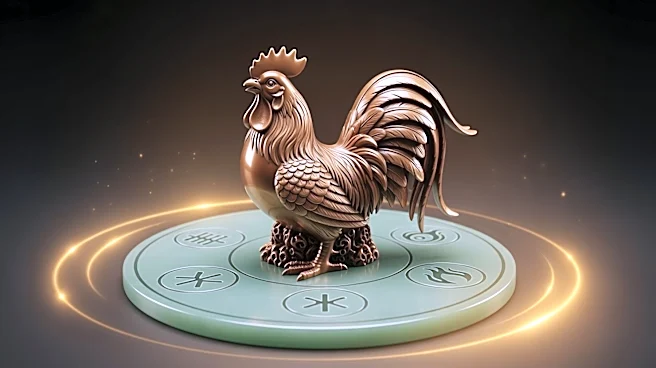

In Chinese astrology, the Rooster is not only a zodiac sign but also part of a complex system of elemental cycles. Each zodiac sign is paired with one of the five elements, creating a dynamic interplay
that influences personality traits and life paths. This article explores the elemental cycle of the Rooster, highlighting how these elements shape the characteristics of those born under this sign.
The Five Elements and Their Influence
The five elements in Chinese philosophy—Wood, Fire, Earth, Metal, and Water—are integral to understanding the zodiac signs. Each element brings its own set of attributes, which are reflected in the personalities of individuals born in specific years. The Rooster, like other zodiac signs, rotates through these elements, creating a diverse range of characteristics.
For instance, a Wood Rooster, born in 1945 or 2005, might be characterized by growth and creativity, while a Metal Rooster, born in 1981 or 2041, could exhibit strength and determination. These elemental associations are not just abstract concepts; they are believed to have tangible effects on the lives and fortunes of those born under the Rooster sign.
Elemental Years of the Rooster
The Rooster's elemental cycle is a fascinating aspect of Chinese astrology. Each element corresponds to specific years, creating a pattern that repeats every sixty years. This cycle allows astrologers to predict certain traits and tendencies based on the element associated with a person's birth year.
For example, the Water Rooster years, such as 1933 and 1993, are thought to bring adaptability and intuition, while the Fire Rooster years, like 1957 and 2017, are associated with passion and energy. These elemental years provide a framework for understanding the diverse personalities and life paths of Rooster individuals.
The Rooster's Elemental Traits
The elemental traits of the Rooster are deeply embedded in Chinese astrology, influencing everything from career choices to interpersonal relationships. Each element offers unique strengths and challenges, shaping the way Rooster individuals approach life.
A Fire Rooster might be drawn to careers that require boldness and leadership, while a Water Rooster could excel in roles that demand flexibility and empathy. These elemental traits are not only important for personal development but also for understanding the broader cultural significance of the Rooster in Chinese astrology.
In conclusion, the Rooster's elemental cycle is a key component of its identity in Chinese astrology. By examining the interplay of elements, we gain insight into the diverse and dynamic nature of the Rooster sign, offering a deeper appreciation for its role in the zodiac.