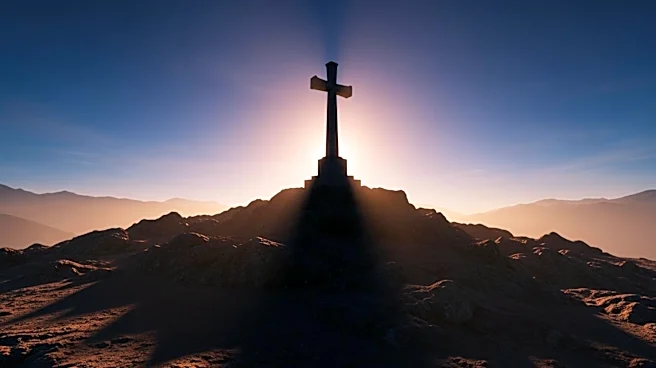






Mount Davidson, the highest natural point in San Francisco, is home to a monumental cross that has stood the test of time. This 103-foot concrete cross, erected in 1934, serves as a beacon of historical significance and cultural remembrance. Its journey from conception to its current status is a tale of dedication, community involvement, and historical milestones.
The Early Crosses
The idea of placing a cross on Mount Davidson began in the early 1920s. The first temporary
cross was erected in 1923, standing 40 feet tall. This was followed by a second cross in 1924, which reached 87 feet but was destroyed by fire the following year. The persistence of the community led to the construction of a nearly 100-foot cross in 1926, which was illuminated nightly before Easter but met the same fiery fate in 1928.
In 1929, an 80-foot wood and stucco cross was built, complete with lighting. This cross marked a significant development as the city purchased 20 acres at the top of Mount Davidson for park use, thanks to donations from the Mount Davidson Conservation Committee. However, this cross too was destroyed by arson in 1931.
The Permanent Cross
The determination to establish a permanent cross culminated in 1933 when Mayor Angelo Rossi, Governor James Rolph, and other community leaders pledged to construct a lasting monument. The 103-foot concrete and steel cross was completed in 1934, with President Franklin D. Roosevelt lighting it from the White House via telegraph. This event marked a significant milestone, as the cross became a site for annual Easter sunrise services, broadcast nationwide by CBS from the 1940s through the 1970s.
The cross was initially planned to be 100 feet tall, but as local columnist Herb Caen noted, there was enough concrete for an extra three feet, leading to its final height.
Cultural and Legal Challenges
Over the years, the cross has been a subject of debate, balancing its religious significance with its status as a historic landmark. In 1991, legal challenges arose regarding the city's ownership of the cross, leading to a lawsuit by the American Civil Liberties Union and other organizations. After a lengthy legal battle, the city auctioned the land in 1997, and the cross was purchased by The Council of Armenian American Organizations of Northern California.
This purchase added a new layer of cultural significance, as a plaque was installed to commemorate the victims of the 1915 Armenian genocide. Despite challenges, the cross remains a symbol of historical and cultural importance, reflecting the community's resilience and dedication to preserving its legacy.