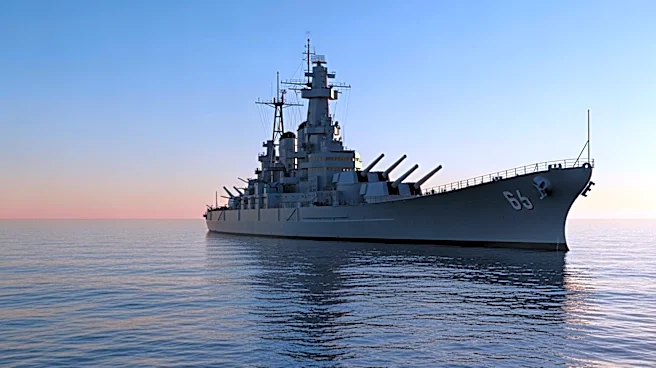

The USS New Mexico (BB-40) played a pivotal role in the United States Navy during World War II. As a battleship with advanced capabilities, she was involved in numerous operations across the Pacific Theater.
This article examines the USS New Mexico's contributions to the war effort, highlighting her key engagements and the challenges she faced.
Early War Efforts
At the onset of World War II, the USS New Mexico was initially stationed in the Atlantic, conducting neutrality patrols. However, following the Japanese attack on Pearl Harbor, she was quickly redeployed to the Pacific. Her first major actions in the Pacific involved shore bombardments during operations at Attu and Kiska, part of the Aleutian Islands Campaign.
The USS New Mexico's role in these early operations was crucial in establishing a foothold for Allied forces in the Pacific. Her powerful armament and advanced targeting systems allowed her to provide effective support for ground troops, helping to secure key strategic positions. These early successes set the stage for her continued involvement in the Pacific campaign.
Major Engagements in the Pacific
Throughout the war, the USS New Mexico participated in several significant battles and operations. She was involved in the invasions of Tarawa, the Marshall Islands, the Mariana and Palau islands, Leyte, Luzon, and Okinawa. In each of these engagements, the battleship provided critical shore bombardment and artillery support, helping to neutralize enemy defenses and pave the way for amphibious assaults.
One of the most notable aspects of the USS New Mexico's service was her resilience in the face of kamikaze attacks. On multiple occasions, the battleship was targeted by Japanese suicide planes, which posed a significant threat to her crew and operational capabilities. Despite these attacks, the USS New Mexico continued to fulfill her mission, demonstrating the bravery and determination of her crew.
The End of the War and Legacy
As the war drew to a close, the USS New Mexico was present in Tokyo Bay for Japan's formal surrender on September 2, 1945. Her presence at this historic event underscored her importance in the Pacific campaign and the broader Allied victory. Following the surrender, the battleship returned to the United States, arriving in Boston on October 17, 1945.
The USS New Mexico's contributions to World War II were recognized with six battle stars, a testament to her effectiveness and the dedication of her crew. Her service during the war highlighted the strategic value of battleships in naval warfare, particularly in providing artillery support and engaging enemy forces at sea.
The legacy of the USS New Mexico (BB-40) in World War II is one of resilience, innovation, and bravery. Her role in key battles and operations helped shape the outcome of the war in the Pacific, and her presence at Japan's surrender marked the end of a significant chapter in naval history. The USS New Mexico remains a symbol of the strength and determination of the United States Navy during one of the most challenging periods in modern history.