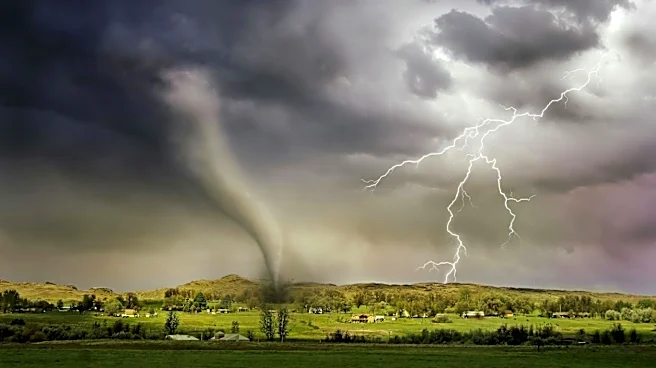




The 2013 Moore tornado was not only a devastating event for the community but also a significant meteorological phenomenon. Classified as an EF5 tornado, it exhibited extreme characteristics that drew attention from meteorologists worldwide. With winds reaching up to 210 miles per hour, the tornado's sheer power and size were remarkable, making it one of the most intense tornadoes to strike the United States in recent years.
Formation and Path
The tornado formed northwest
of Newcastle, Oklahoma, at 2:56 PM local time on May 20, 2013. It quickly intensified as it moved towards Moore, following a path similar to a previous tornado that struck the area in 1999. The tornado's path was over 17 miles long, and at its peak, it reached a width of 1.3 miles. This wide path of destruction was a key factor in the extensive damage it caused.
Meteorologists noted the similarities between the 2013 Moore tornado and the 1999 tornado, both in terms of size and trajectory. The recurrence of such powerful tornadoes in the area highlights the region's vulnerability to severe weather events and the importance of ongoing research and preparedness.
Intensity and Characteristics
The 2013 Moore tornado was classified as an EF5 on the Enhanced Fujita scale, indicating its extreme intensity. The tornado's winds were estimated to be between 200 and 210 miles per hour, capable of causing catastrophic damage. The Enhanced Fujita scale is used to rate the intensity of tornadoes based on the damage they cause, and an EF5 rating is reserved for the most destructive tornadoes.
The tornado's rapid intensification and wide path were notable characteristics that contributed to its destructive power. The combination of high wind speeds and a large diameter made it particularly dangerous, as it was able to impact a wide area in a short amount of time. These characteristics are of great interest to meteorologists studying tornado formation and behavior.
Implications for Future Research
The 2013 Moore tornado has provided valuable data for meteorologists and researchers studying tornadoes. Understanding the conditions that lead to the formation of such powerful tornadoes is crucial for improving prediction models and warning systems. The event has prompted further research into the atmospheric conditions that contribute to tornado formation, as well as the development of more accurate forecasting techniques.
The lessons learned from the 2013 Moore tornado are being applied to enhance preparedness and response strategies for future tornadoes. By studying the meteorological aspects of this event, researchers aim to improve the accuracy of tornado warnings and reduce the impact of these devastating storms on communities.