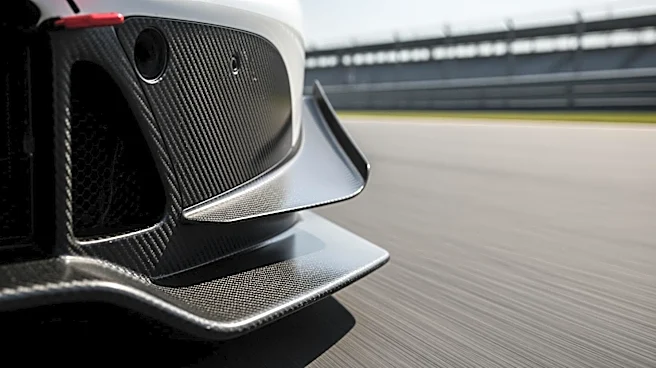





Automotive splitters are a crucial component in the world of racing, designed to enhance the aerodynamic performance of race cars. These devices, typically mounted on the front bumper, play a significant role in directing airflow, thereby increasing downforce and improving the car's grip on the track. This article delves into the function and importance of splitters in racing, highlighting their impact on vehicle performance.
Enhancing Aerodynamics
Splitters are primarily
used to improve the aerodynamics of a racing car. By directing airflow under the car, they help reduce lift and increase downforce. This aerodynamic enhancement allows the car to maintain better traction, especially at high speeds, which is crucial for achieving faster lap times. The splitter works by creating a pressure difference between the top and bottom surfaces of the car, effectively pushing the car down onto the track.
In racing, every fraction of a second counts, and the aerodynamic efficiency provided by splitters can be the difference between winning and losing. The design and material of the splitter are carefully chosen to withstand the high-speed forces encountered during a race. Typically made from lightweight materials like carbon fiber, splitters are engineered to be both strong and efficient, contributing to the overall performance of the vehicle.
Splitters in Modern Racing Cars
Modern racing cars, such as those in the BMW 2 Series (F22), often come equipped with splitters as part of their performance package. These cars utilize splitters to enhance their handling characteristics, allowing drivers to push the limits on the track. The inclusion of splitters in the design of these vehicles underscores their importance in competitive racing.
The BMW 2 Series, for instance, incorporates splitters in its M Performance Parts, showcasing the manufacturer's commitment to optimizing aerodynamics. This integration not only improves the car's performance but also highlights the role of splitters in modern automotive design. As racing technology continues to evolve, splitters remain a key component in achieving superior track performance.
The Future of Splitters in Racing
As automotive technology advances, the design and functionality of splitters are likely to evolve. Engineers are constantly seeking ways to improve the aerodynamic properties of race cars, and splitters will undoubtedly play a role in these developments. Future innovations may include adjustable splitters that can adapt to different track conditions, providing even greater control and performance.
In conclusion, automotive splitters are an essential element in the racing industry, contributing significantly to the aerodynamic efficiency and overall performance of race cars. Their ability to enhance downforce and improve handling makes them indispensable in the quest for speed and precision on the track. As technology progresses, splitters will continue to be a focal point in the design of high-performance racing vehicles.